“The RCMP had the guns, the bayonets and the tear gas; we had a drum and a sheet of paper with our demands.” – Louis Cameron, Ojibway Warriors Society.
On September 29, 1974, the Native Peoples Caravan arrived in Ottawa. From uprisings that summer at the Two Springs occupation in Secwepemc and the reoccupation of Anishinaabe Park by the Ojibway Warriors Society, the Caravan was joined by people from coast to coast.
The next day, Monday September 30, they marched to Parliament Hill.
“The myth of a non-violent Canadian society was smashed to pieces in front of Canada’s Peace Tower on Parliament Hill on September 30th.”
Gary George’s 1974 article in “The Forgotten People,” reported the event, continuing:
“The clash was between club-swinging, helmet-wearing, riot-trained RCMP and placard-carrying Native men, women, children and non-native supporters, all calling for positive action to end the oppression of Native people in Canada. This incident marked the 30th opening of the Canadian Parliament, the official beginning of the Trudeau government’s rule with a majority of seats in the House of Commons.
“The violence started when government officials refused to recognize the presence of the demonstrators. The pomp and ceremony of Parliament’s opening continued with few changes in tradition. When the estimated 200 demonstrators reached the stairs on Parliament Hill leading to the Centre Bloc they were stopped by RCMP and wooden barricades.
“As more people marched up the stairs, the front line of Native people was forced against the barricades. This clash lasted for about twenty minutes before both sides stopped physical conflict. When it finally quieted down the police moved back about a foot and stood four men deep, arms locked, facing the demonstrators. Directly behind them were the press and white spectators. The Native drummers started beating out the American Indian Movement’s rally song. Men, women and children joined voices in the song, filling the air with the chant. …”
Deb Mearns, part of the reoccupation at Two Springs and one of the coordinators for the Caravan, recalled the many events leading up to the Caravan:
“When we were surrounded by the RCMP up in Cache Creek and we negotiated an end to the roadblock and we didn’t get charged, I remember being told by a reporter that managed to sneak into the roadblock that he saw and heard the townspeople in Cache Creek were going up to the police roadblock on Highway 12 and telling the police, “just go in and shoot them.”
“It was not just the housing crisis. There were a number of issues involved. Louis Cameron came out after they had shut down their occupation, in Kenora, and we had already shut down the roadblock at Cache Creek, and we met in Vancouver at the Indian Center.
“They were talking about doing a caravan so we started working on that very quickly. I was one of the front runners, going ahead and organizing where we would go and where we would stay. We were flying by the seat of our pants, I tell you. I don’t know how we made it.
“When we got to Kenora, we used the last of our money to fly me to Ottawa, to make arrangements for us, and a Mohawk person met me there, picked me up at the airport. He told me the police were all inside the Indian Affairs office, expecting that’s where we were going to go. But he knew a place, and we went straight there – the old Union Carbide building that was owned by the federal government. It was abandoned. And it was perfect, you could see Parliament Hill from there.”
Vern Harper, one of its members and co-founders, gave a first-person account of the Native People’s Caravan in his 1979 book, “Following the Red Path ~ The Native Peoples Caravan 1974.” It begins with a quote to capture that day on Parliament Hill:
“The RCMP had the guns, the bayonets and the tear gas; we had a drum and a sheet of paper with our demands.” – Louis Cameron, Ojibway Warriors Society.
“The Caravan had set out from Vancouver only two weeks before, with little advance planning and no official funding. It had come to talk about housing, education and health care, but when the people of the Caravan arrived on Parliament Hill the Prime Minister refused to meet them.”
– Harper, Following the Red Path.
The Native Peoples Caravan had clearly distinguished itself from government-funded, centralized Indigenous organizations. In the UBCIC’s newspaper, The Indian Voice, the editors acknowledged and thanked the Caravanistas, but distanced their Union, the Native Council of Canada, the Inuit Tapirisat and others from the grassroots caravan at the same time. See the newspaper clipping from The Indian Voice, below.
Vern Harper described the difference this way:
“We knew that official Native organizations like the National Indian Brotherhood and the Native Council of Canada weren’t being listened to. It was quite clear to us that these national Native organizations, which had been created by the government in the first place, were just being used. On the one hand, the government would say, “We’ll only talk to your leaders,” but when the leaders tried to talk to them the government wouldn’t listen. And so we decided that we would organize to bring Native people themselves to Parliament.
“We knew that they were ineffective, and that they were not really helping to change things for Native people. In fact, their main role seemed to be to keep the lid on Native protest and Native demands. The government had … funded these organizations in the first place, and it was able to use them to protect itself from any kind of confrontation or direct criticism. When Native people tried to go around the organizations, the government’s line was always, “We can only talk to your official representatives.” Even this was false, because the government wasn’t talking to the official Native leaders. But in 1974, the reality of Native organizations was well established. Many of the people on the Caravan had been in government-funded organizations and gone through that whole frustrating experience.”
The Manifesto, that piece of paper Louis Cameron mentioned, was four pages long.
“The hereditary and treaty rights of all Native Peoples in Canada, including Indian Metis, Non-status and Inuit, must be recognized and respected in the constitution of Canada. It is the continuing violation of our hereditary rights that has resulted in the destruction of the self-reliance of the Native peoples. We are …the most impoverished peoples of Canada.
… the Department of Indian Affairs operates to serve business and government interests – not the interests of the Indian people. We demand a complete investigation of the Department of Indian Affairs by Native People and the transfer of its power and resources to Native communities. …”
Deb Mearns explained the effect of the September 30 event in news media:
“It was a huge eye-opener for the Canadian public because we were an invisible people, and all of a sudden they were faced with us, the Anishinaabe, the Caravan to Ottawa – and how we were treated when we went to Parliament Hill to demonstrate, it was all over the media in Canada and the United States. It was a real awakening – they didn’t know anything about us. There was racism, and there was also a real shock for people to find out that we exist, and the conditions in which people lived.”
*
The Summer 2024 issue of Archive Quarterlyfeatures the reoccupation of Two Springs, Secwepemc, and the armed highway toll there, and how it led into the Native Peoples Caravan.
*
The following images from Vern Harper’s 1979 book, “Following the Red Path ~ The Native Peoples Caravan 1974.”
29 years later, Canada evades the legal and jurisdictional issues they tried to kill along with Secwepemc leaders.
Wolverine, pictured above, was not only the War Chief at Ts’peten, but Chief of Lawfare.
After agreeing to a ceasefire and burning their weapons, Wolverine and a dozen other Sundance defenders walked out of their besieged camp on the advice of John Stevens, their spiritual comrade and advisor, who made them aware that the whole province had been prepared for their assassination by a wall-to-wall media campaign which presented them as terrorists.
When William Jones Ignace, known as Wolverine, walked out of the Ts’peten Sundance grounds on September 17, 1995, he carried a Writ of Arrest to serve upon the representatives of Her Majesty the Queen of England in Right of Canada, whose forces had fired on the camp for 31 days. And whose colonists had sought to deprive the Secwepemc of their natural, internationally protected, rights to their own country, for 137 years.
In the same way that the Sundancers’ petition of January 1995 was stonewalled by BC and Canada’s Attorney General and Governor General, the writ he carried was ignored.
Days earlier, on September 11 1995, Wolverine had shot out the steering column of an Armoured Personnel Carrier, disabling the vehicle, and was later charged with attempted murder for that action. Since he hit his target, the size of a quarter – at the instant the APC’s undercarriage was exposed while rolling over a pine tree – presumably he could have easily shot the soldier standing up out of the hatch.
The APC in question was pursuing two occupants of the camp’s red truck that had just been blown to smithereens by a C-4 landmine (illegal under the international convention), and were fleeing on foot from their now-abandoned, earlier authorized by RCMP, water-run.
Wolverine and the other Defenders of Ts’Peten were not accorded the dignity promised by the Canadian negotiators at “Camp Zulu” upon their agreement to ceasefire and leave the camp. Every Defender was detained and charged criminally, and the international legal challenge was buried and obscured.
The Writ of Arrest was put into Wolverine’s hands to serve upon the Canadian government by the Continental Commission of Indigenous Nations and Organizations (CONIC), who previously in January of 1994 had also intervened in Chiapas, Mexico in similar fashion to avert the total massacre of the Maya Nations of Indigenous Peoples during the uprising of the Ejercito Zapatista de Liberacion Nacional (EZLN).
Unfortunately in Chiapas, January ’94, by the time the CONIC had assembled a delegation of International Indigenous Human Rights Observers the bloodbath was already fully underway with over 200 casualties due to the open armed rebellion of the EZLN against the accelerated pogrom of genocide against the Indigenous Peoples of Mexico to be instituted under the North American Free Trade Agreement (NAFTA).
The following from an article in the Vancouver Media Co-op:
“Native 9/11” – September 11 siege at Gustafsen Lake 1995
In 2016, over a hundred people gathered during the afternoon of September 11 to remember what happened at Ts’peten (“Gustafsen Lake”) on that date in 1995. On that date, more than a dozen Secwepemc sovereigntists were trapped inside a barricade of 400 Royal Canadian Mounted Police (RCMP) – cut off from roads, radio, and satellite phone – at the site of their recent Sundance. A formal inquiry has been demanded ever since.
Last Sunday, there was solidarity with Secwepemc sovereigntists from Flora Banks (west coast) to Miq Maq (east coast) to Treaty 8 (mid-continent) caravanistas in Quebec. And each of the dozen speakers at the event had been profoundly impacted by the stand-off at Gustafsen Lake.
“For guys like Wolverine, who set the stage for resistance; what he did was so significant for me that I went home and carried on the resistance. I was a student during the standoff in 1995, but Wolverine was my hero. I had the honour of meeting him two years ago. We took on the second biggest corporation in the world: Imperial Dutch Shell. We took them on, and we saved the Skeena, the Nass and the Stikine Rivers in our territory.” – Hotseta, Tahltan.
Perhaps the most remarkable thing that happened on 9/11 1995 was the state’s use of banned C-4 landmines, and two Armoured Personnel Carriers, to utterly destroy an occupied vehicle making a negotiated and authorized trip to collect drinking water. Or perhaps it was the 77,000 rounds of ammunition that 400 RCMP and Emergency Response Teams fired into the Sundancers’ camp in their unceded, unsurrendered sacred site. Or perhaps the fact that no one was killed? But some remember best how Wolverine, a Secwepemc political leader aged 65 years, disabled an Armoured Personnel Carrier (APC) with one shot to the steering column, when that tank – which was chasing him through a forest – exposed its undercarriage while rolling over a pine tree.
“Wolverine had a very deep knowledge of the legal parameters of what it means to be Indigenous in this land. If we self-identify as “Indigenous,” “First Nations,” “Aboriginal,” “Metis,” or “Indians,” right away we are complicit within a framework of contractual language of colonization. So, when these cops talk to you, talk to them in your language. Tell them how your grandmothers are connected to your land – that is your true paperwork here.” – Ronnie Dean Harris, Sto:lo, St’át’imc, Nlaka’pamux, Kwikwitlem.
Wolverine died earlier this year. He penned a formal request for a national inquiry into the events at Gustafsen Lake shortly before he passed on to the spirit world. He had been requesting an inquiry since his incarceration in 1995 for “attempted murder” – meaning his attack on the APC – after the BC court trial proved to be heavily biased in favour of British Columbia.
British Columbia’s bias in favour of itself over Indigenous Peoples is really at issue, and is why the international nature of these disputes over rights to the soil must be addressed. Everyone who spoke brought forward the places of their fights for land: ”I was sixteen when I got my first fishing charge, going to get a fish for my grandmother. She asked me to get a fish, so I went and got one. I have a couple hundred fishing charges by now,” said Rick Quipp, Sto:lo.
The people who gathered in Grandview Park, Vancouver, last Sunday – from all corners of occupied British Columbia – demand a formal inquiry into the attempted assassination of those Secwepemc political and spiritual leaders, and their supporters who wouldn’t leave the camp even under threat. And they remember their war heroes.
“We didn’t feel any fear. We were happy. We did our ceremonies, we were happy, we sang our songs, we told our stories. But they kept tightening our surroundings so we weren’t able to get water. So these two went on the truck to get water from the creek. That’s when their truck was blown up by land mines. Only the dog was killed.” – Flora Samson, Secwepemc language teacher, Ts’peten Defender, Wolverine’s widow
“My hands are raised especially to the women who go out there and put themselves in harm’s way. They don’t just make the points, they make the changes. On this 21st year, marking the day when 77,000 rounds of live ammunition were fired on Indigenous leaders in ceremony, on sacred lands. …each of you, keep doing that work. Hold that line, wherever you are. Whatever you can do to get the truth out there: not just to dispel the mis-truths, but to get the truths out there. We need every one of you and we need everyone that you know, because we are in the midst of a battle. – Audrey Siegl, Musqueam
There was probably no need for more Indigenous war heroes, but Canada and British Columbia created them anyway. In January of 1995, Secwepemc traditional leadership had launched a legal action to get an appropriate judicial hearing of their complaints against the state. Their complaints were 150 years old at that time, and they were continuing to seek a lawful resolution to Canada’s illegal occupation and assumption of jurisdiction over their territory.
There is no treaty, no constructive arrangement, no deal between the Secwepemc people and the state that provides for an uninvited Canadian or British Columbian presence on Secwepemc lands. However, Great Britain began to assume jurisdiction before 1858 and the advent of “British Columbia.”
The Attorney General of BC stonewalled the January 1995 legal application, which was destined for the Governor General of Canada, contrary to his duty as a colonial legal representative for the Province. The Attorney General’s office is the only address available to Indigenous complaints against the state, and then a complaint must be forwarded to the Governor General in order to arrive at the appropriate court. Instead of processing the complaint, the province and its occupying army, the RCMP, staged events which would escalate a confrontation on the ground.
It is these staged events which resulted in a police and military siege on a spiritual camp in unceded lands. More than events, the RCMP then commandeered all functioning media outlets to report its dictations about what was happening during the siege. The branding of the land defenders as “terrorists,” “thugs,” “doomsday fanatics,” and more, seemed to create an acceptance in the BC public that the “green light to shoot to kill” was justified. The siege did not accomplish its apparent goal of assassinating the Secwepemc leaders, but then a BC Supreme Court trial of the surrendering Ts’peten Defenders – they surrendered to give up their position for a fair trial, which they did not get – detained them in the proceedings of the longest criminal trial in Canadian history. And then in prison.
Why did BC choose military confrontation over legal arbitration? This is the central question to a formal inquiry into events at Ts’peten in 1995. And the suspected answer to that question is: British Columbia knew then, as it knows now, and as it knew before, that the colonial regime can never win a legal challenge to its assumption of jurisdiction in Indian territories which have never been sold, ceded, or surrendered to the crown.
British Columbia chose assassination of the legal advocates over entering a defined process to a legal resolution, and the Canadian military – as well as the RCMP – stood behind the province.
Quotes from the event:
“If you do nothing to stop the genocide, you are complicit. In our court case, Edmonds v. Canada, IACHR 12-929, we state that we have no treaty with Canada. Canada has no jurisdiction. (applause) I think all the Canadians here speak English. “No” means “no.” In the International Court of Justice, they state that consent is sacrosanct.” – Pau Tuc La Simc, James Louie, Líl’wat
“Now, for us to protect a scared site, as a Sundance Ground, all the occupants at Ts’peten were Sundance Family. We heard that cattle were desecrating our sacred site. When we erected a fence to keep the cattle out, that’s when the altercation started. It was like the wild, wild west. They had the cattlemen come out and intimidate the women, children, and Elders at our camp. They had no actual deed to the land.
“A lot of people came out to support us: from Haida Gwaii; Haudenosaunee, people came far from down south to honour us as true owners of the territory. The RCMP moved very quickly – they didn’t issue any kind of “Jane Doe” or John Doe” injunction – they just surrounded us. Just as they’re doing in South Dakota right now.” – Miranda Manuel, Secwepemc
“Our struggle has not ended. We are now finally reaching the point where we are beginning to be heard, and we have gained some ground. The courts are beginning to recognize the fact that they have to get our permission before they proceed with their own plans for our lands. That is the job of the young people now. To make sure that the government is called to that task. They have a responsibility to deal with us in a fair fashion before they move onto our lands.” – Bill Lightbown, Kootenai.
Inquiry
An Inquiry into the police and military siege at Gustafsen Lake might reasonably pursue the following unanswered questions:
– What are the merits of the Ts’peten Defenders’ legal position that the land they were occupying does belong outright to the Sewepemc, and that the RCMP does not have a right to enter that territory without invitation, and that a British Columbia court does not have jurisdiction to hear a land-based jurisdictional dispute between British Columbia and the Secwepemc? In what international court can that question be heard?
– Why did the Attorney General of British Columbia not forward the Secwepemc petition to the Governor General in January of 1995? That action is one of an Attorney General’s prescribed duties. Did that political and legal stonewall predicate confrontation on the ground, instead of in a court room? Was that alternative desired by BC?
– What was the purpose of the RCMP’s several meetings with the cattle rancher Lyle James (who had a provincial license to range his cattle in the area of Gustafsen Lake) late in 1994 and early in 1995, and their interference in his relations with the Sundance leaders, their persuading him not to attend a preliminary meeting with the Sundance leaders, as he had for the previous three years?
– Why were none of the criminal actions of the rancher’s cowboys, violent actions against the Sundancers in June and July, investigated by RCMP at the time? Did those assaults against the Sundancers escalate the prospect of confrontation between the rancher and the Sundancers, putting the latter into a self-defense posture unprotected by the RCMP?
– When RCMP Superintendent Len Olfert admitted in his testimony at trial that the RCMP had been planning for this police and military event since April 1995, even though no shots were fired until August, what was he talking about? This oddity was not investigated further at trial.
– Why was the Aboriginal RCMP Constable Wilson removed from his role as liaison with the campers and replaced by negotiator Mike Webster, of Waco, Texas fame, and “Camp Zulu,” when Constable Wilson had repeatedly reported the Ts’peten Defenders’ desire for a peaceful discussion? And why was Wilson never involved in mediations again?
– Who requested the use of internationally banned landmines against the Ts’peten Defenders, and why? Who authorized that usage, and who supplied the C-4 explosives? What are the repercussions for such illegal usage?
– Who authorized the internationally repugnant use of military action against citizens? Why? Who supplied the resources of the Canadian Armed Forces to the RCMP’s command? Why? What are the repercussion for such illegal action?
– What events surrounded all news media editors’ cooperation, allowing the RCMP to dictate the content of their reporting during the stand-off? And what or who informed the RCMP’s actions in that regard? And how did the RCMP decide exactly what to dictate to the media on a day-to-day basis, and what was their purpose for the content they supplied? And was the media’s resulting extremely biased coverage criminally defamatory, or inciting to hatred?
– On what grounds did the trial judge refuse the jury to consider Wolverine’s lawyer’s testimony? The exemption was stated as a reason for the jury’s finding of guilt in the Ts’peten Defenders. Was the judge’s refusal legal?
– How is it that none of these unprecedented, incredible events have ever been reviewed by any government or civil body?
– What was the cost of that military operation? The trial? The extensive surveillance of the Sundancers long before shots were fired and throughout the stand-off? The activities of RCMP who were meeting with the rancher from 1994 up until and possibly during the stand-off?
Further quotes from Sovereigntists on September 11, 2016:
Audrey Siegl, Musqueam:
“My hands are raised especially to the women who go out there and put themselves in harm’s way. They don’t just make the points, they make the changes. On this 21st year, marking the day when 77,000 rounds of live ammunition were fired on Indigenous leaders in ceremony, on sacred lands, I really thank the ancestors for guiding us, for continuing to have faith in us when we have a hard time having faith in ourselves. I thank all of you who let the ancestors move through them and guide them. We are our ancestors, this is my experience. Each of you, keep doing that work. Hold that line, wherever you are. Whatever you can do to get the truth out there: not just to dispel the mis-truths, but to get the truths out there. We need every one of you and we need everyone that you know, because we are in the midst of a battle. And what we’re fighting for is not just what’s sacred to us, it’s for survival of every life.”
Flora Samson, Secwepemc, Ts’peten Defender:
“Weytk. I feel happy that we’re standing strong together. I pray every day for all the workers and supporters. I thank my granddaughters for helping me through difficult times. My husband left us in March.
I met Wolverine in 1974, when we were growing gardens in our community. 1974 was our first stand-off, in Cache Creek. We tried to have better housing for our native people, because we lived in very, very poor housing, where there was no running water, no power. Instead, they gave us these great big houses that we have to pay for now.
But ever since then we have been supporting people in their struggles for good water, for the fish, for our burial grounds. Now it’s the mining that’s going through our countries. I pray for the people in South Dakota now who are trying to protect their land. (applause) My family just returned from there.
Ever since I’ve known my husband, he was a hard worker. He liked to help the people; to provide for his family and community. We grew big gardens. Later on, we started helping the people who were standing up for their rights. We sent food to them. Wolverine said, “You can’t fight when you don’t have food,” so he started planting big gardens. I thank all the people that came to help, weeding and planting and harvesting in the garden.
I thank all the people who are standing up for their rights. Wolverine always said, “Never give up. Never give up or these small children; if you give up they will have nothing. They will be walking down the road with little packsacks on their back; they will have nothing.
Now I see his grandchildren speaking up, standing strong, listening to his words.
Keep strong. Support one another. By supporting one another, we all gather as one to fight our enemy. And you know who the enemy is. (audience: “They’re right behind you!” The RCMP were a presence in Grandview Park that day.)
When we were in Gustafsen Lake, I was on my way up there to bring food to the people up there. I was busy at home canning, and the boys were helping me at home. My son was there. So I brought the food up to Gustafsen Lake, and I was going to come right back and do my canning. But that night they closed the road, nobody could go out, and I was stuck in the camp – me and my two children and grand-children. From then on we couldn’t get out of the camp. Planes and helicopters were flying around, army tanks were surrounding us. They were putting land mines all around us. Every once in awhile we would hear them going off, when the cows would step on them.
We didn’t feel any fear. We were happy. We did our ceremonies, we were happy, we sang our songs, we told our stories. But they kept tightening our surroundings so we weren’t able to get water. So these two went on the truck to get water from the creek. That’s when their truck was blown up by land mines. Only the dog was killed.
On the last day, on the 10th, they sent some Elders in to see if we wanted to go out, but nobody wanted to leave. Only two people left at that time, but we all stayed. But the next day our Medicine Man came and he told us we should go. So the four Elders were the last to leave. Everyone else left before us. We were going down the dirt road, and we turned off, and I said, “Oh no!” We could see cops and army people and guns pointing at us from all over the place, even the trees. There were a bunch of dogs. They were all armed and had their shields on. I said, “Is this where they’re going to kill us?” We didn’t know what had happened to the rest of our people who went out ahead of us. I thought they were probably all dead. But they were all there. They were getting handcuffed, and pictures taken. We were the last ones to go out. It was really sad to leave that place. But that’s where they took us to jail. And Wolverine was the one that got the most time – eight years.
When we were up there, we felt at peace; we weren’t afraid. We all laughed and joked around, sang songs and drummed and prayed. We had to ration our food.
Last year when we were on our way to Gustafsen Lake for the anniversary, when we started getting close I started shaking. I wanted to see the place. But I got okay when I got there, walking around, looking at the place. But I could picture everything that went on. All the trees that got shot, they were all cut down. I guess they were cutting down the evidence that was caught in the trees.
But this is what happened. My son was at home on August 18th when that first shot was fired at a cop or an army guy. And yet, when we got to court, he was blamed as the one who shot that first shot. They never did believe us, but it was all on the phone. Because ever since 1974 our phone was tapped, they heard everything. But they wouldn’t let that stand as evidence. So my son had to pay for that. He was put in jail, he was given pills until he went crazy. We fought very hard to get him out of jail. So they put him a “home” that was all fenced up. And they were still giving him pills that were taken off the shelves years and years before. But he made it to run away from that place. On his way home, he froze to death – trying to get away from that place. He paid a high price for that shot, when the guy who took that shot had called me on the phone that day – and he never admitted that in court.”
Miranda Manuel, Secwepemc:
“From our territory to your territory, our hearts are here. Kukwtsam. I would like to speak on the work my grandfather has done over the last 30 years.
My grandfather launched an inquiry into Gusafsen Lake. What does that mean to Canada? We have human rights violations going on here.
Now, for us to protect a scared site, as a Sundance Ground, all the occupants at Ts’peten were Sundance Family. We heard that cattle were desecrating our sacred site. When we erected a fence to keep the cattle out, that’s when the altercation started. It was like the wild, wild west. They had the cattlemen come out and intimidate the women, children, and Elders at our camp. They had no actual deed to the land.
A lot of people came out to support us: from Haida Gwaii; Haudenosaunee, people came far from down south to honour us as true owners of the territory. The RCMP moved very quickly – they didn’t issue any kind of “Jane Doe” or John Doe” injunction – they just surrounded us.
Just as they’re doing in South Dakota right now.
Bill Lightbown, Kootenai:
“Our struggle has not ended. We are now finally reaching the point where we are beginning to be heard, and we have gained some ground. The courts are beginning to recognize the fact that they have a legal obligation to deal with us and our rights; that they have to get our permission before they proceed with their own plans for our lands.
We are reaching a point now where they have to pay attention. That is the job of the young people now. To make sure that the government is called to that task. They have a responsibility to deal with us in a fair fashion before they move onto our lands.”
Gurpreet Singh:
“I speak now on behalf of the South Asian community. I want to assure you that I stand with you in your struggle against Site C Dam; in your struggle against pipelines; in your struggle for an inquiry into this Gustafsen episode.”
It’s a shame that Ujjal Dosanjh behaved like a colonialist stooge, when he was the first South Asian Member of the Legislated Assembly in BC. His grandfather was a freedom fighter in India. We want an Inquiry into Gustafsen Lake.”
Matthew Kanes, Git Gaat:
“I stood alongside my brother, Donald Wesley Junior, they resisted at Lelu Island. I spent five months at Lelu Island resisting the drill rigs, at the salmon estuary. It’s a foreign company, from Malaysia, but the RCMP was escorting them and treating us like hostiles. We were peacefully protesting. Most of the time when we encountered them, we asked them for permits. They said they didn’t have to present permits to us, so we kept escorting them off. The eel grass, on Flora Banks, that’s where the (salmon) smolts go until they’re adults. The most crucial part of the Skeena watershed is where the salmon go.”
Hotseta, Tahltan:
“We blockaded Imperial Metals, and we were charged.
I went home about ten years ago. There was a lot of industry on our territories; a lot of threat of industrial disaster. We took on the second biggest corporation in the world: Imperial Dutch Shell. We took them on, and in the process, we saved the Skeena, the Nass and the Stikine Rivers in our territory. They all come from one spot in our territory. Dutch Shell was going to do fracking in those headwaters, but we stopped them. Another company tried to do the same, but we stopped them also.
For guys like Wolverine, who set the stage for resistance; what he did was so significant for me that I went home and carried on the resistance. Right now, there is serious hunting by foreigners going into our territories. They refer to our territory as “no limit entry.” We do a lot of work in that regard as well.”
Ishkadi, Tahltan:
“I spent a lot of my life under colonial laws, thinking that I’m not native. It took me awhile to regain my sense of self and to learn my language and my culture. People like Wolverine, of mythical status, when they showed support at our stand against RedChris Mines in 2014.”
Ronnie Dean Harris, Sto:lo, St’át’imc, Nlakapamux, Kwikwitlem:
“I come from a lot of dissent, protest and activism in my bloodline. We gather here today to commemorate a very important standoff that has been erased, buried in the Canadian history by the corporate media, by the education system, and by the policing systems, and by narrative that goes to everything that being Canadian is – which is, un-indigenous.
Wolverine had a very deep knowledge of the legal parameters of what it means to be Indigenous in this land. Unceded territories, a lack of treaties …and women standing up; mothers leaving their homes to stand up against the corporate state of Canada, USA, and oil giants.
Tell them how your grandmother was connected to this land; tell them in your own language. That connects you to your sovereignty, and that gets you out of the framework agreements of colonization.
We’re looking at a colonial corporate state, governed by a figurehead – the queen: it means nothing.
How your grandmothers are connected to your land – that is your true paperwork here. The problem is we’ve been born into colonization. We’ve been used to asking, we’ve been used to fighting for it, trying to get it. But the problem with that is – that our sovereignty already exists now.”
Chrissie Oleman, New Aiyansh, Nisga’a
“Tomorrow we will be marching in solidarity with standing Rock, South Dakota. We’re asking everyone with a TD bank account to close it.”
Events of September 11, 1995
On the morning of September 11, 1995, a circle of 400 Royal Canadian Mounted Police constricted the camp of the Ts’peten Sundancers. The spiritual and political leaders of Secwepemc, who had launched a legal action against Canada for its unilateral, military assumption of jurisdiction over Secwepemc homelands and Secwepemc people, were cut off from the world by the police barricade. They were camping at the sacred site of their most recent Sundance ceremony, and refused to leave – even after being provoked, threatened, and assaulted by a local rancher who was in consultations with the RCMP.
The Sundancers, spiritual leaders, chiefs and their families were now cut off by the RCMP line from their water supply as well. So, on that morning, they sent two people out in a red truck along a predetermined course to fetch water, as agreed by CB radio with the command centre of “Operation Zulu” – the RCMP’s name for their siege at Gustafsen Lake (Ts’peten, to the Secwepemc people).
As the water carriers proceeded to the water supply, along that predetermined course, the RCMP detonated a C-4 landmine under that red truck, then rammed the truck from the front with an APC and then rammed the truck from behind with another tank, and then opened fire on the two occupants of the truck who fled and were – miraculously – not harmed by the explosives or tanks. They ran from the explosion back towards camp, with their arms raised above their heads to show empty hands. One of the two was hit by a bullet to her bicep, which was at that moment only inches from her head. The bullet was fired from a high caliber sniper rifle.
Then the Armoured Personnel Carriers pursued the two through a forest of pine trees, driving over the trees as if they were nothing but weeds.
And then the 400 cops let loose a hail of bullets over the camp. They let loose a hail of 77,000 rounds.
But the explosion had triggered action by a wary Wolverine. Wolverine, aka William Jones Ignace, age 65, Secwepemc political, community and family leader, set off towards the explosion with a hunting rifle. He ran towards the APC as OJ Pitawanakwat and Suneva Bronson ran away from it, and they eventually swam across the lake back to camp. Wolverine intended to cover the two people escaping, and stop the two APCs from approaching the camp – they were firing as they proceeded. One of the APCs was grounded on a tree stump. The second APC began pursuing Wolverine. Finally the tank’s front end was raised up as the machine drove over a tree, and Wolverine shot out its steering mechanism under the front end. That target was about the size of a 25 cent piece.
Canada is, and was at the time, a state signator to an international convention which prohibits the use of C-4 plastic explosives, which are detonated by remote control.
Canada is, and was at the time, also a signator to international conventions which forbid military assault by a state government on a state’s own population. Interestingly, in a legal reality which Canada and British Columbia did all this to obscure, Secwepemc people are not actually, not consensually, citizens of Canada. Canada has actually unilaterally imposed Canadian citizenship on all Indigenous people, as of 1951.
The first HBC Governor west of the Rockies made his first tour of the forts with a note to himself in mind: the potential profit in Christian conversion of his newly acquired, autonomous Indigenous trading partners.
On August 15, 1824, George Simpson, Governor of Hudson’s Bay Company “North” (mostly west), left York Factory for the Oregon Territory.
His mission was to make the newly acquired west coast trading posts profitable.
After a bloody competition with the North West Company, and a decisive gunfight at Seven Oaks near the Red River, HBC had absorbed its rival trading company by Imperial British decision in 1821. Fraser, Thompson, and McKenzie had been NWCo. men.
Like those ‘explorers,’ Simpson set out on the river highway with some colonial paddlers and the essential Indian Guide.
Unlike the previous company, he set out with a mission to test the west coast peoples’ receptiveness to Christianity; to introduce it and recommend it. A Company-and-King minded man, Simpson noted the profit that religious conversion would bring. He made a lot of notes.
It was a key part of Simpson’s overall mission, which was to secure British North America in the west by making its trade competitive and resistant to America’s northward aspirations.
The War of 1812 between the British and USA had only demarcated a 49th parallel border between them so-far into the Great Plains.
On the west coast, the British Crown sought treaties with Spain, Russia, and the Americans long before it ever made any treaties concerning land interests with the Nations who enjoyed ancient sovereignties there. Simpson’s work resulted in the Russia treaty at Alaska in 1825, and the Oregon Treaty with America in 1846.
200 years later, the actual role of the Christian churches among Indigenous Peoples has only just begun to be acknowledged for the Trojan Horse it was.
Not until the indescribably tragic case of Blackwater v. Plint, 1997 – so unbearable to testify to, half of the dozen plaintiffs took their own lives during the hearings into church and state’s crimes against them as children in Indian Residential School – did BC settlers even acknowledge that its early work towards “Christian civilization” of Native Peoples was “flawed” and “regrettable” in 1998.
They/we, the BC settlers, certainly have never come to terms with the way we profit from the most unforgivable truth about Britain’s churches’ role: to dehumanize the Peoples as they were; to peddle the myth that Britain’s God is superior to the Gods of these Peoples; and preach the associated divine right of its kings as if European domination was a natural inevitability – denying the sovereignties, jurisdictions, and land titles of the Native Nations to this day in colonial courts and international forums.
When today’s Indigenous Elders are questioned about why their people moved away from productive, beautifully situated, spiritually connected, and traditional seasonal villages – to the ill-suited, waterless, and usually barren Indian Reserves (all that was left to them by BC and Canada’s Indian Reserve Commissions, finally legislated in 1924) – one reason recalled is to be close to the church. Every Reserve had one.
Terrorized by biological warfare, and with the only access to treatment or vaccination coming (when it inconsistently did) from a handful of legitimate Reverends, the connection between church and survival was often made.
Although moving to Indian Reserves was forced by two much more compelling reasons – government armed and escorted relocation, and deadly settler violence outside the reserves – community organizing around the on-Reserve church played a part.
Most every traditional spiritual practice and ceremony of governance was criminalized under the Indian Act for over 75 years. Indigenous politics and religion sometimes survived just under the skin of a church, because gathering at church was the only kind of gathering not broken up by Indian Agents. Sometimes with a watchman posted outside, holding a cross and a Bible; and with raised voices signing Onwards Christian Soldiers inside; the secretly illegal gathering was sheltered. The Native Brotherhood, the Shaker religion, the Native Church, all ended up using the cross as a shield from the ills of the world, just not in the same way the Missionaries told them it would work.
Christianity was used, in the end, as west coast Peoples’ defense against the invading foreigners who sold it to them. At least the physical symbols and the deceptive cloak of singing was effective.
Simpson, during his time, used his knowledge of the Sinixt, Sto:lo, and coastal Salishan Peoples to drive a hard inter-colonial boundary through their countries. The Oregon Treaty split their countries apart, on either side of today’s Canada-US border.
The first western Governor of the HBC produced a legacy of bad faith and betrayal: promoting the lie of a beneficent Christian mission, making agreements for Britain’s essential trade in furs and geographical knowledge based on recognition of the Tribes, when he relied entirely on them, while at the same time engineering the infrastructure that would purposefully overtake and dispossess them. This legacy was the making of British Columbia.
As Native politicians famously orated in the 1970s, and ever since: “In the beginning, we had the land and all they had was the Bible. Now we have the Bible and they have the land.”
It started today, 200 years ago, with the first visit of the HBC Governor to the trading forts of the west. It continues today, with the Christian monarch’s head on every piece of Canadian currency and mounted on the wall behind every Canadian judge.
~
For more on the early Oregon Territory, Simpson, European treaties over Indigenous lands, Missions and biological warfare mentioned in this article, see:
The Oregon Encyclopedia online
The Hudson’s Bay Company Archives, Manitoba Archives
The Canadian Encyclopedia online
Archive Quarterly ~ journal of “the west wasn’t won archive project”
The largest demonstration of solidarity with Indigenous Peoples and their land titles until Fairy Creek, mass arrests at Clayoquot Sound in 1993 are said to have been at least 850 persons strong. 300 arrests in one day, to stop logging in the Nuu-chah-nulth coastal old-growth forests.
In 1994, the Friends of Clayoquot organization published a journal to document their thinking at the time.
To be a peaceful, courageous and consistent advocate for the protection and restoration of the ecosystems of Clayoquot Sound with respect for the Ha-houlthee of the Ha-wii – the traditional rights and responsibilities of the Hereditary Chiefs.
Excerpt from the 1994 Handbook:
The Thriving of Wild Salmon, a presentation by Simon Lucas,
co-chair of the B.C. Aboriginal Fisheries Commission and the Nuu-Chah-Nulth Tribal Council. He was speaking to the participants of the Suzuki Foundation’s Wild Salmon conference held November 18th, 1988:
“If we are going to rebuild our wild stocks, we have to think about all the things that we have inherited. You and I could stand here for days about the inheritance. Lakes, rivers and creeks, and salmon stocks large and small, no matter how many hatcheries we have, they can never begin to match the abilities of our rivers and creeks and wild stocks to produce fish. If we protect them we have to say “no” to industrial pollution and to the idea of safe levels of poison chemicals. How long are we going to continue to self-destruct? If we befoul the rivers, streams, creeks and lakes, we are befouling ourselves. We have to say NO!
We keep seeing government after government allowing pulp mills to be built before safeguards. They are in place, finally, and we say, “what about the pollution?” “Oh, but that’s going to cost $40 million to see that we’re pollution-free.” Right now we have “safe levels” for our people in this country. We’ve got to say “No, no more.” Otherwise, all of us are just paying lip-service to wild stock.
My vision of the rebuilding of the Kennedy Lake sockeye stocks is an impossible dream if we add the insult of spraying toxic chemicals alongside the stream, as they are doing today, in addition to the painful injury of steep, clear-cut slopes. Our inlets will not provide the environment needed by our young salmon to grow and survive if we allow the salmon farming to grow unchecked. We have many examples: pulp mills, lumber mills, the Fraser River is an example.”
Contents
of “Clayoquot Summer 1994, Rainforest Action Handbook”:
The Imposition of European Law on the Native Nations of (what is now called) British Columbia, by Lavina White and Eva Jacobs
The Thriving of Wild Salmon, a presentation by Simon Lucas, Chair of the Aboriginal Peoples’ Fisheries Commission of British Columbia
The Developing Reality, by Valerie Langer
Maps of Clayoquot Sound and Vancouver Island
A Conservation Biology Vision for Vancouver Island
Ecological Characteristics of Coastal Temperate Rainforests
Watersheds
What is Bioregionalism?, by Peter Berg
On Extinction
Welcome to Venus: Or, the Earth’s Future after Ozone Depletion
A Short History of B.C. Forest Policy
Multinational Corporations Are Not Your Friends
The Limits of Environmentalism Without Class: Lessons from the Ancient Forest Struggle of the Pacific Northwest
Eleven Inherent Rules of Corporate Behaviour
The Shameful Seven
The Share Group Phenomenon
The International PR Machine: Environmentalism a la Burson-Marsteller
The 12% Solution?
Facts, Statistics and Stuff!!!
Does the Public … Support Clearcutting? Trust the Government to Regulate Logging?
The B.C. Forest Practices Code
A Tree Plantation is Not a Forest
On Ecological and Cultural Restoration
Making Paper Without Trees
Canadian Government Violating International Law
Compensation for Lost Logging Rights: Who Owns Public Lands, Anyway?
Sustainable Development is Possible Only if We Forego Growth
Community Steps Toward an Ecologically Sustainable Forest Culture
The Challenge of Feminism
What Do You Value?
Clayoquot Makes the Newspaper
Reflections on Civil Disobedience
Eight Stages in the Process of Social Movement Success
Working for the Earth Without Going Crazy
A Glossary for Forest Activists
Magazines, Journals and Newsletters of Interest
Organizations to Watch
Books and Publishers of Interest
The Complete (well, almost!) History of the Friends of Clayoquot Sound
A special investigation of the 1974 blockade of Highway 12, at Bonaparte, Secwepemc.
After Elder James Morgan’s house burned down, and there was no access to funds or building materials to rebuild it, the Chief and dozens of others held down a narrow strip of the main transportation artery between Lillooet and the Interior – to levy a $5-per-traveller toll, raising funds to rebuild themselves.
With new interviews and a compilation of reports from the time, the coverage leads into a wider background for the on-reserve housing crisis. With a deep dive into on-reserve housing development since the Peoples were displaced from their usual homes.
The Native Peoples’ Caravan
The people at Cache Creek were soon joined by members of the Ojibway Warriors Society, the American Indian Movement in Canada, and allied that worked quickly together to coordinate the Native Peoples’ Caravan to Ottawa that Fall.
“Tsilhqot’in Nation v. British Columbia”
Tracking the first ever Supreme Court of Canada Declaration of Aboriginal title lands.
– Excerpts from the court rulings; Interviews with the Tsilhqot’in neighbouring nationals whose recognition of Tsilhqot’in title long predates the existence of Canada; Book review: “Lha Yudit’ih We Always Find A Way – Bringing the Tsilhqot’in Title case home” by Lorraine Weir with Chief Roger William; Maps and Timeline.
Celebrating fifty years of Native Women’s Associations
Jeannette Corbiere-Lavell joins us to discuss her legendary case to regain Indian Status after sexist provisions in the Indian Act – and being sued by the Attorney General – withdrew it.
Grandmothers Healing Journey, Honouring the Grandmothers on the Fraser River, and those who lived and died without their rights or recognition, far from their homes, in the cities. Artists reac out in an exhibition at the New Westminster gallery at the Anvil Building.
Excerpts from the Indian Act, as its amendments impacted women and children’s right to Indian Status.
BC’s Indigenous-focused graduation requirement
One year into BC’s Indigenous-focused graduation requirement: a class profile with one course in Sto:lo that thrived. “That class had the perfect combination of sxwōxwiyám – stories from long ago, and sqwélqwel – news from today.”
More:
20 years since the Kelowna Accord: why didn’t it work? Committing to “Closing the gap” in housing, health, economies and education, felled the federal government.
The Department of Indian Affairs (Minister of the Interior), describes the conditions of landlessness and displacement that have led to today’s crises, in its first Annual Report, 1874.
The “biggest demonstration in BC history” – Indigenous march on the Victoria Legislature, June 25, 1974.
44 pages 8.5×11 black and white
Honouring the indomitable spirit of Indigenous Peoples west of the Rocky Mountains.
With the recent Haida agreement, “Rising Tides,” where British Columbia recognizes Haida title to its lands and waters as “Aboriginal title,” we are forced to wonder: is this the same “Title” that Indigenous Peoples west of the Rocky Mountains have been roadblocking, litigating, and petitioning international courts for?
No doubt the Haida have little intention of relinquishing their inherent ancestral titles and rights, their internationally recognized Peoples’ rights to self-determination and control of their own natural wealth. But reading the Agreement reveals there is no doubt the province intends to minimize its recognition of what that entails.
“Aboriginal title is defined under Section 35 of the Canada Constitution Act, 1982, and by the common law.” That is, Canadian law.
A sharp reading of the Rising Tides agreement would argue that what has been achieved is actually the unprecedented recognition by the Council of the Haida Nation: recognition of Canadian jurisdiction. In the text, Haida nation recognizes all of the province’s existing fee-simple titles, tenures, and jurisdictions – without compensation. They say they are working to reconcile these jurisdictions now.
British Columbia and Canada have already been forced to recognize Indigenous jurisdiction in countless ways, so the statement of the crown’s recognition is, if anything, diminished by the phrasing “Haida Aboriginal title.”
Is Haida Title the same as Aboriginal title? Not according to every preceding generation of Haida matriarchs and chiefs. (Check out an archival collection of Haida roadblocking, negotiating and lawfare at the ROADBLOCK page of The West Wasn’t Won.)
“Our place in our country… is that the native people have their homelands, and have control over their own lives; absolute control, with all the responsibilities over our resources and lands. We have to have control. Otherwise, I don’t see anything changing for us. …But the thing that I find really terrible is that they [the government] plan to give us empty lands with no more resources.” – Lavina White, former President of the Council of the Haida Nation.
Native articulations of their title is typically so categorical.
“We own this land, lock stock and barrel!” – Nisga’a. “We are the rightful owner of our country and everything pertaining thereto.” – Lillooet. “We stand for compensation to us by the British Columbia government for all lands of ours appropriated, or held by them, including all lands preempted or bought by settlers, miners, lumbermen, etc.” – Southern Interior Chiefs.
Beginning in 1973, the Supreme Court of Canada (SCC) has been building its definition of Aboriginal title, to supersede the existing, well-defined, and independently articulated land titles of native nations.
That was the first year that the “BC Indian Land Question” ever had its day in that court, fully one century past the original legal complaint. The Nisga’a sued for a Declaration that their native title had not been extinguished.
Forty years and hundreds of cases later, the SCC made a Declaration of Aboriginal title in the Tsilhqot’in decision, 2014. It’s the first and only one in Canada.1
The accumulated characteristics of Canada’s Aboriginal title, according to the common law, include that:
it is sui generis (unusual, not like normal proprietary title)
it therefore cannot be registered as an interest in land (ie, registered with the Land Titles Office)
it is “subject to certain carve-outs” (it can be infringed for reasons justifiably important to Canadians)
the Aboriginal title holders can not sell their land or dispose of it in any way except by sale or cession to the Crown government (unless by the Crown’s explicit agreement)
it is an Aboriginal right
it must be proven in court to exist, and part of that proof is continuous, exclusive occupation; and use of the land which is integral to the distinct culture of the Aboriginal people claiming the right
Aboriginal peoples cannot use their land for any purpose which contradicts that defining, culturally integral aspect
the consultation and accommodation procedures for development of land subject to Aboriginal rights, as defined in Canadian courts, requires Aboriginal people to participate and be bound by the results
The Tsilhqot’in decision is the first and only example of judicial recognition of Aboriginal title in Canada. The Haida agreement is the first and only example of political recognition of Aboriginal title.
No one can fault the Haida for tempering their position, for seeking a real working solution to saving their future. Hopefully the Rising Tides is only an increment, in an unfolding event that resurrects Haida title.
The West Wasn’t Won has a new journal!
Archive Quarterly celebrates its first edition this month.
A curated collection in every edition, these journals will each fill a sizable gap in authentic readings available to inform the restitution process between settler society and Indigenous societies today.
AQ’s very first Special Issue will focus on Title, coming June 21.
As of the time of writing, the Tsilhqot’in decision, 2014, was the only Supreme Court of Canada declaration of Aboriginal title. Since then, at the end of April 2024, a qualified victory by the Nuuchatlaht People was won in BC Supreme Court, where the BCSC made a finding for Aboriginal title to “small spots” within the Nuuchatlaht territory. British Columbia’s “small spots’ theory refers to site-specific places, like a fishing spot or hunting blind, and it is a theory that was specifically rejected by the Supreme Court of Canada in Tsilhqotin 2014. It is also entirely rejected by Indigenous Peoples. However, April 2024 in Nuuchatlaht represents the first time that a BC court has ever made a Declaration of Aboriginal title. In the 2007 BCSC decision in Tsilhqot’in, Justice Vickers gave an opinion on Aboriginal title, but not a Declaration. ↩︎
Chiefs from the Southern Interior met at Spences Bridge in 1910, to study the demands of the Indian Rights Association of BC. The Interior Chiefs decided to affiliate with the coast Indian Rights Association and stand with them to demand certain rights for Indian people and a settlement of the land issue. But the Chiefs also understood how important it was for them to carefully define, and speak for, their own concerns. They had translator James Teit write it all down in point-by point form so it could be easily distributed. The points were made in the form of a declaration and dated the 16th day of July, 1910.
The DECLARATION OF THE INDIAN CHIEFS IN THE SOUTHERN INTERIOR OF BC begins:
To Whom It May Concern:
We, the underwritten Chiefs of Indian Bands in the Southern Interior of British Columbia, hereby make known our position in regard to the question of Indian rights, and the policy of the Indian Rights Association of BC, as follows:
First, we stand for treaty rights with the dominion government, the same as all the Indian tribes in the other provinces of Canada, and that all matters of present importance to the people of each of our tribes be subject to these treaties, so that we shall have a definite understanding regarding lands, water, timber, game, fish, etc., and we consider such matters as schools, doctors, aid to the aged, Indian funds, etc., and general assistance by the government should also be included in these treaties.
Second, we stand for compensation to us by the British Columbia government for all lands of ours appropriated, or held by them, including all lands preempted or bought by settlers, miners, lumbermen, etc.
Third, we stand for the enlargement of our reservations wherever we consider it necessary, by having a sufficiency of land allotted to us so as to enable us to compete on better terms with whites in the way of making a living.
Fourth, we stand for the obtaining of a permanent and secure title (to be acknowledged by the government as such) of our ownership of our present reservations, and of such lands as may be added thereto.
Fifth, we stand for the carrying of our claims before the Privy Council of England for settlement, and in the event of our obtaining justice as we expect, we ask such compensation as may be awarded us for our lands, etc., shall be paid to us, half in cash, and the other half to be retained by the dominion government, and used as occasion may require for our benefit.
Sixth, we ask for and expect the dominion government to support us in our claims, and help us to obtain our rights to the best of their ability.
Seventh, we believe the Indian Rights Association of BC (which has been formed by other Indians of this country) has the same object and claims that we stand for, there- fore we declare our agreement with the members of the same, and our resolve to join them, and support them in the furtherance of our mutual interests, and the attainment of our rights.
Eighth, we believe that the Indian Rights Association of BC has hired Mr. Clark, K.C., of Toronto, to look after their interests and conduct their case in harmony with their desires, and those of the dominion government, and we hereby declare our agreement with this step, and our intention to support it financially and otherwise, as well as we are able.
It’s The West Wasn’t Won’s own journal, like a news clipping service across the last two or three hundred years.
Did you know? This month marks a hundred years since the Allied Tribes of British Columbia petitioned to shut down the Indian Reserve Commission report.
If you didn’t, a subscription to Archive Quarterly will really help!
What was hidden from history is what’s needed now.
AQ shakes out the archives for primary sources on Indigenous land and British Columbia, sharing:
~ key extracts from archival artifacts
~ quotes and interviews on the issues as they were
~ relatable commentary and a few side-notes
~ images and timelines that connect past and present
The first April issue will be here in three weeks!
Archive Quarterly is about it, the west wasn’t won!
BC history is lit from one side – showing settler progress to advantage, while rendering the Indigenous reality of that “progress” indiscernible.
This magazine aims to balance the view. As well as the written records, interviews with Elders reveal circumstances leading up to political movements, court actions and roadblocks, and conditions in their communities at the time.
Excerpts in the journal will be presented in full documents online, where they are accessible to download.
You can also donate to AQ to become a founding sponsor – thanks!
Group and bulk print subs available, just drop us a line.
If you just can’t afford the subscription, get in touch and we’ll get you in.
By subscribing to AQ today, you’ll be helping to get work done.
Special Issues
Did you know? The ongoing denial of Aboriginal land title – and the tiny size of First Nations reserves – contributes directly to child apprehensions from young Aboriginal families. The situation can’t change without land to build on and live in.
Special Issues are on the way for AQ, focusing on Aboriginal Title, the Non-Status Indian era, Roadblocks, and more. The Special series dives deep and provides historical overviews and insight, and the development takes time and research and communications.
AQ’s online digital archive
It keeps growing, as old docs are scanned and processed and uploaded. The physical archive costs money for storage, and the digital archive costs money for web space.
The magazine comes out of a collection kept up by Electromagnetic Print – EMP, a book label founded to print voices seldom heard in the media, especially the voices of native sovereigntists.
Thank you very much for reading and have a great day!
100 years ago this month, the Allied Tribes of British Columbia petitioned Parliament to shut down the report of the Indian Reserve Commission.
BC has very quietly set up a public consultation process on its plans to embed First Nations local governments within its Lands Act.
The lead is buried pretty deep: BC’s original assumption of control of all the land (without treaty or constructive arrangement) was in 1874. It was patently unconstitutional, and, at first, Canada’s Attorney General disallowed it.
What unfolded then was: replacement of the troublesome AG – Telesphore Fournier, with Edward Blake who allowed a new 1875 BC Lands Act, equally unconstitutional and an act of wholesale annexation, on the basis of settler convenience. Then Canada passed the Indian Act, locking Indigenous Peoples into a second-class-state of outlaw and criminalization. Meanwhile the Province of British Columbia sold off and settled prime Indigenous real estate, fencing communities decimated by smallpox into an-acre-a-person Reserves.
Fifty years of protest, petition, and physical defense of the land (1874-1924) did nothing to remedy the situation at the time, but increased BC and Canada’s resolve to the point of legislating the tiny Reserve Boundaries and making litigation on behalf of Indians… illegal (1927).
A hundred years ago this month, the Allied Tribes of British Columbia petitioned Parliament to shut down the report of the Indian Reserve Commission. BC and Canada had set out to finalize the Indian Land question in 1912, with the McKenna-McBride Commission, and unilaterally “quiet the Indian title,” all the while diplomatically shutting the land issue out of courts and the Privy Council forum.
14. By Memorandum which was presented to the Government of Canada on 29th February, 1924, the Allied Tribes opposed the passing of Order-in-Council of the Government of Canada adopting the Report of the Royal Commission upon the ground, among other grounds, that no matter whatever relating to Indian affairs in British Columbia having been fully adjusted and important matters such as foreshore rights, fishing rights and water rights not having been to any extent adjusted, the professed purpose of the Agreement and the Act had not been accomplished. 15. By Order-in-Council passed 19th July, 1924, the Government of Canada, acting under Chapter 51 of the Statutes of the year 1920 and upon recommendation of the Minister of the Interior adopted the Report of the Royal Commission.
50 years before that, the Petition of the Douglas Tribes was brutally clear about the Indian Reserve crisis. And the Reserve boundaries have rarely, and barely, shifted since the final cuts of 1924.
The BC plan now, apparently, is to gain the consent of the Indigenous nations, in the form of the individual Indian Bands / First Nations, to their Lands Act after all.
It is appearing like a visitation of the 2009 BC Recognition and Reconciliation Legislation, which was put to death, in ceremony, in 2009 – once the grassroots people caught wind of it. The grassroots people tend to be very cautious about allowing their elected representatives to sign-on with government initiatives, and acknowledge the crown as the legitimate source of power over their lands, peoples, and futures.
However, little is known about this 2024 draft legislation except that it is proceeding as quickly and mysteriously as the 2009 event, which suddenly surfaced early in the Spring and was submerged by the end of summer.
And this Blog’s timeline of docs under “Land Claims – policy and protest.” for more on the 2009 legislation, Indigenous Alliances and protest of government assumptions.
Check out Archive Quarterly – a new publication featuring newly digitized history that informs the present here in British Columbia. The first issue arrives April 2024. Every issue features key archival papers and artifacts; quotes and interviews with Elders on the issues; and relatable commentary to connect past and present.
Readers can Subscribe, Support, and Contribute: there are many ways to be engaged!
Part 5 of this week’s blog, No More “Reconciliation Sticks”
In the 1970s, at least one informant in the Canadian government was relaying the state’s plans to Indigenous political leaders.
The obvious question is, why did the Governors Attorney and General, the Superintendents, judges and Ministers have secret plans?
In one easily cracked nutshell, the Canadian state was already wildly liable for attacking the British Crown’s “Allies; the Tribes and Indian nations with whom We are Connected” – and fur trading partners – in their own protected territories, so peace and good faith would be hard to recover. And because, in the case of the Colony of British Columbia, the British wouldn’t give them any money for Treaties. So the politicians and judges could not very well speak out about what they had in mind – at least not plainly.
The many-headed word “reconciliation” aids them there.
In Canada, it has taken three centuries of brutal tactics, and the martial law of Indian Act Band Councils, and the colony has still not convinced the nations to become consenting colonial districts.
Today, Canada is more desperate than ever to manufacture this consent.
Using the “concept of reconciliation,” among many coercive tactics, a replacement Indian Act targets Indigenous communities under duress.
Attempting to transform constitutionally and internationally protected peoples, owners of rich and substantial land bases, into virtually landless provincial municipalities, Canada has passed into law an entire framework to replace the Indian Act. You may remember the First Nations Governance Act, revised; the First Nations Fiscal Accountability Act; the First Nations Land Management Act, et al, as the omnibus Bill C-45, 2012, which sparked the Idle No More protests.
The crucial difference with this municipalization plan, is that the present day First Nations’ entry into confederation would be achieved by consent. Consent to the state and recognition of “crown interests” are achieved incrementally in delegated jurisdiction agreements concerning education, child welfare, housing, health, and such; as well as in negotiation of land claims under the 1974(78) Comprehensive Claims Policy and the 1995 Inherent Rights Policy (the leading extinguishment programmes in Canada today),
There, reconstituted under Canadian law – having ratified an individual First Nation constitution; having released and indemnified the colonizers; having accepted cash as the full and final settlement of Aboriginal rights – the First Nations will be outnumbered in provincial unions of municipalities. There, First Nations will be dependent on five-year provincial funding agreements and occasional aid for natural disasters, and will not retain their autonomy, or sovereignty, or even those controversial Aboriginal rights.
Today’s article looks at the mechanism of the “concept of reconciliation” at play in the municipalization of Indigenous communities. Municipalization is the only future, under Canada’s runaway judges, consistent with their regularized practice of complete abrogation and derogation from “Aboriginal and treaty rights.” It is the only possibility that conforms to the reconciliation program, as described by the Supreme Court of Canada.
It will not be achieved by any means consistent with the UN Declaration on the Rights of Indigenous Peoples.
But hey, if First Nations want to make Final Agreements that extinguish their rights, who’s to stop them.
From unilateral legislation to coercion
So, in the 1970s, Walter Rudnicki was working for the federal government. He shared confidential information with the leaders of the Union of BC Indian Chiefs. He confirmed the intention of Canada to finally coerce the assimilation of every Indian Band as a provincial municipality, and thereby liberate itself from the burden of acquiring title. A consensual union would also indemnify the state of past harms.
Here’s the setting.
The legendary 1969 White Paper, the Statement of the Government of Canada on Indian Policy, had just failed spectacularly up: forging extensive political allegiances from coast to coast to coast. It had been a play to unilaterally assimilate the nations by legislation, demolishing the Indian Act and every line of constitutional ink that described the burden of legally acquiring title to the Indian territories.
The Nishga case, Calder v. The Attorney General of British Columbia, got a 1973 admission from the Supreme Court of Canada that Aboriginal title continues to exist in Canada, unextinguished.
Trudeau the First and his Minister of Indian Affairs, Jean Chretien, passed the federal Comprehensive Claims Policy within the year. Any Indigenous nation could apply within the process it enabled, and they could get small cash and smaller land deeds as a final settlement of their title, rights, and interests in the surrendered area.
The Comprehensive Claims Policy, 1978 update, is the leading negotiating policy today.
Indigenous leaders did not particularly need an inside informant to confirm the meaning and intent of that. But it may have been helpful, in some cases, to have a little advance warning of the next strategy being formulated.
It was helpful in 1981, in the case of Trudeau’s next best plan, the attempt to get a new Constitution from Britain: one which did not include any obligations to the now occupied nations.
It was helpful in 2009, when British Columbia had tried to simply legislate the Bands under provincial jurisdiction.
Someone gave the Union of BC Indian Chiefs a copy of the September, 2004 “Secret Framework for Renewing Canada’s Policies with Respect to Aboriginal and Treaty Rights.” Emphasis in the original.
The draft Framework begins by reminding us that the Speech from the Throne, April 2004, stressed finding more efficient ways of concluding self-government agreements. (Self-government means municipalization under Canadian law and abandonment of original Indigenous titles and jurisdictions, at least the way Canada uses the term.)
It mentions the “sectoral follow-up table on expediting land claims,” which are “a key component for transforming relationships.” (That is, until First Nations abandon original claims and accept delegated Canadian authorities in Final Agreements, they won’t get any.)
It says,
“The Speech from the Throne and the establishment of the sectoral table on land claims and self-government reflects the reality that establishing cooperative relationships with Aboriginal peoples on quality of life issues must be underpinned by effective policies and processes for addressing Aboriginal and treaty rights.” (That is, there won’t be any improvement in on-Reserve quality of life until extinguishment agreements are signed – as above.)
The Aboriginal participants at the same sectoral follow-up voiced the exact opposite set of priorities:
“Aboriginal groups emphasized that joint work on quality of life issues must be situated in the broader transformative agenda based on recognition and respect for Aboriginal and treaty rights.”
The secret draft writers resolved that stitch by reminding the secret reader,
“The Supreme Court of Canada has stated that the basic purpose of section 35 of the Constitution Act, 1982, is the reconciliation of the pre-existence of Aboriginal societies with the sovereignty of the crown. Reconciliation has become the key organizing principle which the courts have used in addressing issues related to Aboriginal and treaty rights.” (That is, the court has taken the political lead and reduced legal rights to issues, so the government’s job is just to follow suit.)
The 2009 British Columbia “Recognition and Reconciliation Legislation” was crafted under Premier Gordon Campbell and his cabinet of hungry skeletons, particularly Mike deJong, Wally Oppal, and former QC Geoff “they never had any title and if they did it was extinguished by the presence of the crown” Plant.
This legislative flop was certainly influenced by the 2004 secret plan – if nothing else, it must have been lent audacity. The province’s 2009 Re&Re Legislation even came with sign-off from the First Nations Leadership Council (FNLC)[i] and their lawyers from Mandell Pinder.
Only thing was, the FNLC hadn’t mentioned anything about the legislation to its members, or their respective peoples and constituents, when the right honourable Mike deJong announced to media the “seismic shift” that was about to occur in BC.
And consent is sacrosanct. The bluff was called, retracted, and turned to ash – like the White Paper Policy 1969.
The government’s only working plan now is coercion.
Instead of consent, all these years, there’s only forcible imposition
Canada has forcibly imposed the Indian Reserve and Indian Band structures – on non-treaty and treaty nations alike.
British Columbia plays a huge part in the necessity that mothered that invention.
The province of BC was written into existence in 1858, unbeknownst to any Indigenous leaders west of the Rockies, by the Queen of the British Empire – precisely one-half the circumference of the globe away. Then she forgot about it, and nobody in England wanted to pay for treaties there.
There is no need for me to re-write what happened once the Indigenous protest reached a critical level. This is from Bruce Clark’s “The Error in the Tsilhqot’in Case,” 2018:
“In 1874 British Columbia enacted a Crown Lands Act that regarded all crown land as if it were public land available for disposition, even though the land is part of the continental reserve for the Nations or Tribes of Indians, not being “ceded to, or purchased by Us.” In a report to the Canadian Privy Council, Attorney General Télésphore Fournier recommended disallowance under section 90 of the Constitution Act, 1867, on the ground of conflict with the proclamation and section 109. The report was approved in a Minute in Council dated 23rd January 1875 and endorsed by the Governor General.”
“British Columbia then made a proposal to Canada to resolve the Indian problem by establishing a commission to investigate and “set apart” provincial Crown lands as “reserves” for Indian use. This led directly to the Indian Act, 1876. The Acting Minster of Interior Affairs in a report dated 5th November 1875 recommended approval of the provincial plan, which was done by the Canadian Privy Council pursuant to Minute in Council dated 10th November 1875. This entailed leaving the originally disallowed Crown Lands Act to its operation, i.e., reviving it. Attorney General Fournier was elevated to the Supreme Court and was replaced in office by Attorney General Edward Blake. Blake reported under letter dated 6th May 1876 to the Governor General explaining that “Great inconvenience and confusion might result from its disallowance.” As recommended, on second thought, the Governor General did leave the statute to its operation. Treaties were not made thereafter in mainland British Columbia. There was no need, since all Crown land was thereafter unconstitutionally regarded as public land available for disposition. It was as if the Royal Proclamation of 1763 and the “subject to” proviso in section 109, BNA Act, duly had been repealed or had never existed.”
When Canada passed the Indian Act, everything an Indigenous nation would need to do to survive was criminalized. In the legislation, Indians were defined negatively as “a person is anyone other than an Indian.”
If Indigenous Nations didn’t consent to be governed by the Indian Act, why go along with it?
Because someone had to take those roles in the leadership and administration of the office; in the Band Council.
No, they really had to.
You can’t have an economy based on the resources in a few acres of Indian Reserve, and you’re not allowed to sell anything anyway. Not even vegetables or produce, when it makes competition for settlers at their markets.
In 1935 the Indian Act was amended to reflect that there must be one (1) Chief Counselor per Band, and that he should be elected by popular vote, in the prescribed fashion. This did not resemble any Indigenous structures.
But without that, the Band can not receive the relief funds provided by the government which took their land. That relief program started approximately at the time the plains peoples were starving because the settlers wiped out the buffalo… to make sure they would starve.
In BC, it started in 1927, after DC Scott and his colleagues in the Judicial Committee, in Ottawa, dismissed the Claims of the Allied Indian Tribes, formally. The relief was the “BC Special” – $100,000 per year, “In lieu of treaties.”
There were more than 200 Bands at that time. The <$500 per Indian Band per year, a pittance – and most of it paid to the Minister of the Interior to administrate the fund, hasn’t quite kept up with inflation here in 2023.
This is what makes things like “economic reconciliation” sound attractive to First Nations. This is how “the reconciliation of aboriginal societies with the sovereignty of the crown” is achieved: under duress.
Pitawanakwat, 2000
In an Oregon County court, Justice Stewart compared OJ Pitawanakwat’s situation in Canada with members of the Irish Republican Army in Ireland. She found it was manifestly the same. Just as Spain refused, in the 1990s, to extradite IRA members to Britain, Justice Stewart refused Canada’s extradition request.
Pitawanakwat was present at the Gustafsen Lake police siege, 1995, and had subsequently been charged, detained, and released on bail after two years. He fled to the USA.
Now, because of the facts that “his conviction was of a political character,” and in a “politically charged climate,” were recognized by an American judge, he lives there still, unable to return home to Anishinabek territory.
At Gustafsen Lake, they said no to the Indian Act; they said no to municipalization; and they said no to extinguishment in full and final settlements. The Attorney General declared war on them.
“We’re not going to agree to anything that will affect our economy.”
Thus spake the province’s negotiator at the St’át’imc Chiefs Council protocol table, in 2008. He might as well have been speaking on behalf of the Canadian state.
The “reconciliation” proposed by Canada would be achieved, if ever, because it is the only prescription for change that Canada will agree to. And that change is: Indigenous nations must submit to their bisection and reduction to scattered postage-stamp communities, where less than a quarter of their own Band membership has room (or housing) to live. They also must relinquish all claims against the province, the state, and “anyone else” for past harm. They must reconstitute themselves, starting with a new Constitution for each First Nation, and enter the hallowed halls of the Union of BC Municipalities.
The conditions under which that kind of “consent” would be achieved, would not hold up under international scrutiny.
It would be achieved under a colonially imposed, extra-legal regime, rather than by authentic governance procedures. It would be achieved by denying Indigenous titles, and capitalizing on the financial ruin which has resulted from this. It would be achieved by refusing to recognize authentic and legitimate holders of the rights to political decisions, who can be marginalized by the imposed ratification procedures.
But, to the great credit of humanity – which will go down in history forever – Indigenous Peoples may be cash poor, but they’ll surely survive these lean, mean years and live their own way.
Thank you very much for reading. Takem i nsnukw’nukw’a.
[i] Executives of the First Nations Summit (BC Treaty Process); Assembly of First Nations (BC region); and Union of BC Indian Chiefs.
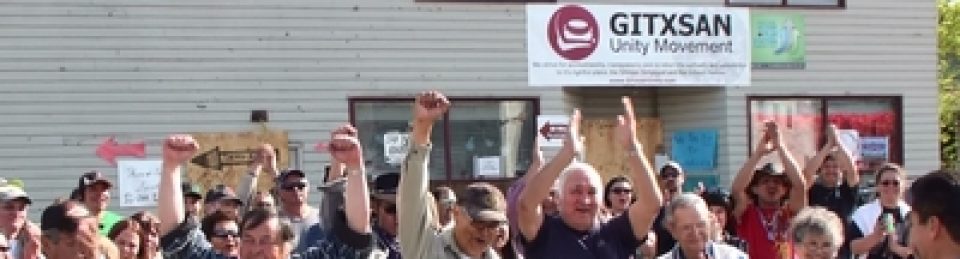
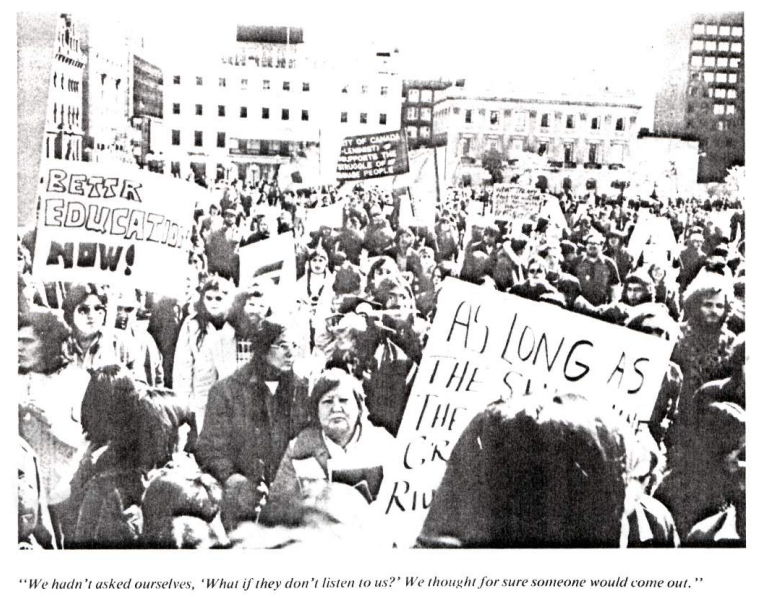


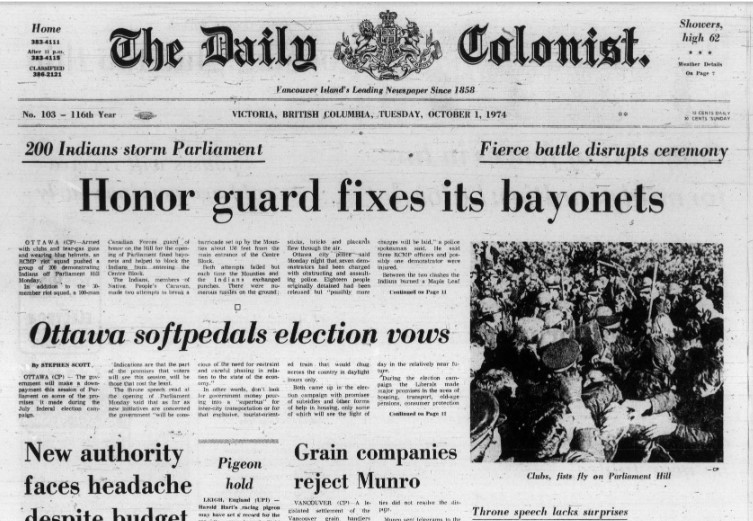
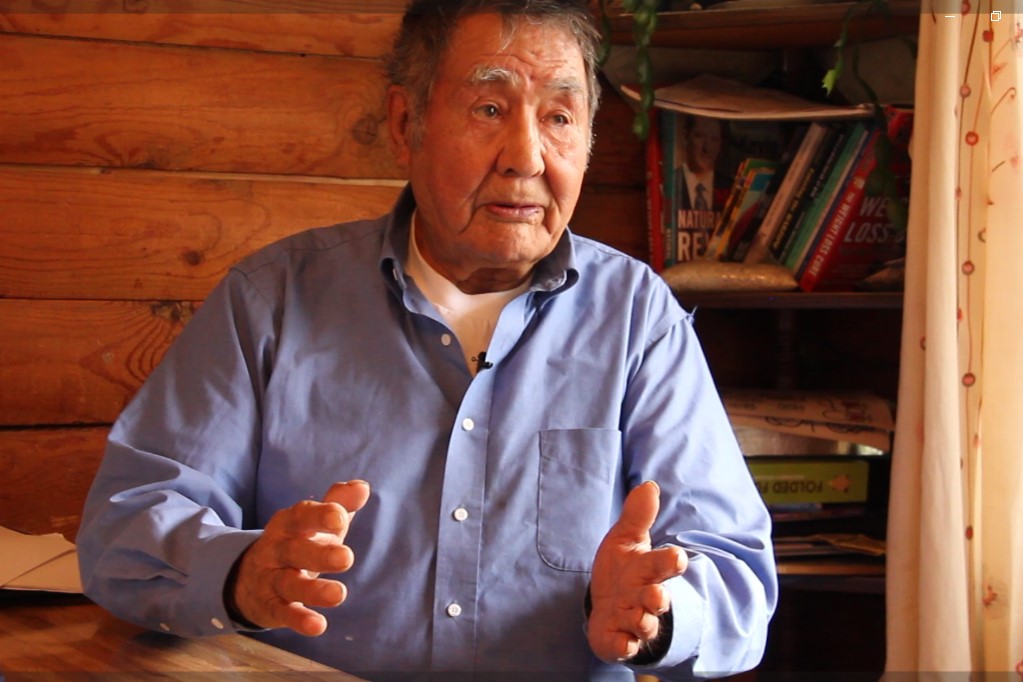
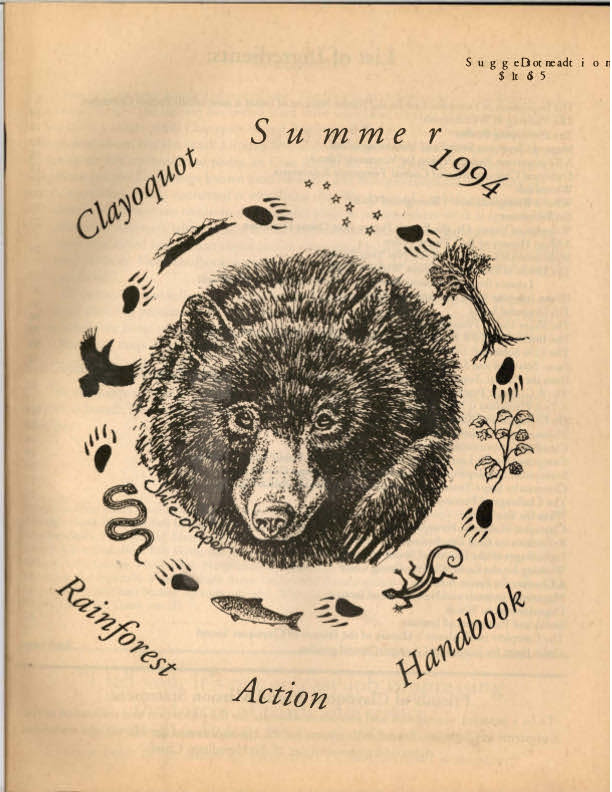

 The West Wasn't Won