• About The West Wasn’t Won archive project
  • Archive Quarterly
  • Children
  • Fisheries
  • Land of the Peoples
  • Lawfare
  • Non-Status Era
  • Roadblocks and Restitution
    • Gustafsen Lake
    • Haida
    • Líl’wat
    • Nisga’a

The West Wasn't Won

~ Outlive the colonial world.

The West Wasn't Won

Category Archives: Indigenous Declarations

CLAIMS OF THE ALLIED INDIAN TRIBES, B.C. 1919

06 Saturday Sep 2014

Posted by Admin in Comprehensive Claims - Policy and Protest, Indigenous Declarations

≈ 1 Comment

Tags

Statement of the Allied Indian Tribes of British Columbia

CLAIMS OF THE ALLIED INDIAN TRIBES, B.C. November 12, 1919


APPENDIX A

STATEMENT OF THE ALLIED INDIAN TRIBES OF BRITISH COLUMBIA

FOR THE GOVERNMENT OF BRITISH COLUMBIA

PART I. – GENERAL INTRODUCTORY REMARKS

The Statement prepared by the Committee appointed by the Conference held at Vancouver in June, 1916, and sent to the Government of Canada and the Secretary of State for the Colonies, contained the following:

The Committee concludes this statement by asserting that, while it is believed that all of the Indian tribes of the province will press on to the Judicial Committee, refusing to consider any so-called settlement made up under the McKenna Agreement, the Committee also feels certain that the tribes allied for that purpose will always be ready to consider any really equitable method of settlement out of court which might be proposed by the Government.

A resolution, passed by the Interior Tribes at a meeting at Spence Bridge on the 6th of December, 1917, contained the following: –

We are sure that the Governments and a considerable number of white men have for many years had in their minds a quite wrong idea of the claims which we make, and the settlement which we desire. We do not want anything extravagant, and we do not want anything hurtful to the real interests of the white people. We want that our actual rights be determined and recognized. We want a settlement based on justice. We want a full opportunity of making a future for ourselves. We want all this done in such a way that in the future we shall be able to live and work with the white people as our brothers and fellow citizens.

Now we have been informed by our Special Agent that the Government of British Columbia desires to have from us a statement further explaining our mind upon the subject of settlement, and in particular stating the grounds upon which we refuse to accept as a settlement the findings of the Royal Commission on Indian Affairs for the Province of British Columbia, and what we regard as necessary conditions of equitable settlement.

In order that our mind regarding this whole subject be understood, we desire first to make it clear what is the actual present position of the Indian land controversy in this Province of British Columbia.

Throughout practically the whole of the rest of Canada, tribal ownership of lands has been fully acknowledged, and all dealings with the various tribes have been based upon the Indian title so acknowledged.

It was long ago conceded by Canada in the most authoritative way possible that the Indian tribes of British Columbia have the same title. This is proved beyond possibility of doubt by the report of the Minister of Justice, which was presented on January 19, 1875, and was approved by the Governor General in Council on January 23, 1875. We set out the following extract from that report:

Considering then these several features of the case, that no surrender or cession of their territorial rights, whether the same be of a legal or equitable nature, has been ever executed by the Indian Tribes of the province – that they allege that the reservations of land made by the Government for their use have been arbitrarily so made, and are totally inadequate to their support and requirements and without their assent – that they are not averse to hostilities in order to enforce rights which it is impossible to deny them, and that the Act under consideration not only ignores those rights, but expressly prohibits the Indians from enjoying the rights of recording or pre-empting land, except by consent of the Lieutenant-Governor, the undersigned feel that he cannot do otherwise than advise that the Act in question is objectionable as tending to deal with lands which are assumed to be the absolute property of the province, an assumption which completely ignores as applicable to the Indians of British Columbia, the honour and good faith with which the Crown has in all other cases since its sovereignty of the territories in North America dealt with their various Indian tribes.

            The undersigned would also refer to the British North America Act, 1867, section 109, applicable to British Columbia, which enacts in effect that all lands belonging to the province, shall belong to the province, ‘subject to any trust existing in respect thereof, and to any interest other than the province in the same.’

            That which has been ordinarily spoken of as the ‘Indian title’ must of necessity consist of some species of interest in the lands of British Columbia.

            If it is conceded that they have not a freehold in the soil, but that they have an usufruct, a right of occupation or possession of the same for their own use, then it would seem that these lands of British Columbia are subject, if not to a ‘trust existing in respect thereof,’ at least ‘to an interest other than the Province herein.’

            Since the year 1875, however, notwithstanding the report of the Minister of Justice then presented and approved, local governments have been unwilling to recognize the land rights which were then recognized by Canada, and the two governments that entered into the McKenna-McBride Agreement failed to recognize those land rights.

If the two governments should now be willing to accept the report and Order in Council of the year 1875 as deciding the land controversy, they would thereby provide what we regard as the only possible general basis of settlement other than a judgment of the Judicial Committee of His Majesty’s Privy Council.

By means of the most direct and independent petition of the Nishga Tribe, we now have our case before His Majesty’s Privy Council. We claim that we have a right to a hearing, a right which has now been made clear beyond any possibility of a doubt. Sir Wilfred Laurier, when Prime Minister, on behalf of Canada, met the Indian Tribes of Northern British Columbia, and promised without any condition whatever that the land controversy would be brought before the Judicial Committee. Moreover, the Duke of Connaught, acting as His Majesty’s representative in Canada, gave positive written assurances that if the Nishga Tribe should not be willing to agree to the findings of the Royal Commission, His Majesty’s Privy Council will consider the Nishga petition. In view of Sir Wilfred Laurier’s promise, and the Duke of Connaught’s assurances, both of which confirm what we regard as our clear constitutional right, we confidently expect an early hearing of our case.

Before concluding these introductory remarks, we wish to speak of one other matter which we think very important. No settlement would, we are very sure, be real and lasting unless it should be a complete settlement. The so-called settlement which the two governments that entered into the McKenna-McBride Agreement have made up is very far indeed from being complete. The report of the Royal Commission deals only with lands to be reserved. The reversionary title claimed by the Province is not extinguished, as Special Commissioner McKenna said it would be. Foreshores have not been dealt with. No attempt is made to adjust our general rights, such as fishing rights, hunting rights and water rights. With regard to fishing rights and water rights, the Commissioners admit that they can make nothing sure. It is clear to us that all our general rights, instead of being taken from us as the McKenna-McBride Agreement attempts to do by describing the so-called settlement thereby arranged as a “final adjustment of all matters relating to Indian affairs in British Columbia” should be preserved and adjusted. Also we think that a complete settlement should deal with the restrictions imposed upon Indians by Provincial Statutes and should include a revision of the Indian Act.

Now, having as we hope made clear the position in which we stand and from which we look at the whole subject, we proceed to comply with the desire of the government of British Columbia.

PART II – REPORT OF THE ROYAL COMMISSION

Introductory Remarks

The general view held by us with regard to the report of the Royal Commission was correctly stated in the communication sent by the Agents of the Nishga Tribe to the Lord President of His Majesty’s Privy Council on 27th May, 1918.

We now have before us the report of the Royal Commission, and are fully informed of its contents, so far as material for the purposes of this statement. The report has been carefully considered by the Allied Tribes, upon occasion of several meetings, and subsequently by the Executive Committee of the Allied Tribes.

Two general features of the report which we consider very unsatisfactory are the following: –

  1. The additional lands set aside are to a large extent of inferior quality, and their total value is much smaller that that of the lands which the Commissioners recommend shall be cut off.
  2. In recommending that reserves confirmed and additional lands set aside be held for the benefit of the bands, the Commissioners proceeded upon a principle which we consider erroneous, as all reserved lands should be held for the benefit of the Tribes.

Grounds of Refusal to Accept

In addition to the grounds shown by our introductory remarks, we mention the following as the principle grounds upon which we refuse to accept as a settlement the findings of the Royal Commission:

  1. We think it clear that fundamental matters such as tribal ownership of our territories require to be dealt with, either by concession of the governments, or by decision of the Judicial Committee, before subsidiary matters such as the findings of the Royal Commission can be equitably dealt with.
  2. We are unwilling to be bound by the McKenna-McBride Agreement, under which the findings of the Royal Commission have been made.
  3. The whole work of the Royal Commission has been based upon the assumption that Article 13 of the Terms of Union contains all obligations of the two governments towards the Indian Tribes of British Columbia, which assumption we cannot admit to be correct.
  4. The McKenna-McBride Agreement, and the report of the Royal Commission ignore not only our land rights, but also the power conferred by Article 13 upon the Secretary of State for the Colonies.
  5. The additional reserved lands recommended by the report of the Royal Commission, we consider to be utterly inadequate for meeting the present and future requirements of the Tribes.
  6. The Commissioners have wholly failed to adjust the inequalities between Tribes, in respect of both area and value of reserved lands, which Special Commissioner McKenna, in his report, pointed out and which the report of the Royal Commission has proved to exist.
  7. Notwithstanding the assurance contained in the report of Special Commissioner McKenna, that “such further lands as are required will be provided by the Province, in so far as Crown lands are available.” The Province, by Act, passed in the spring of the year 1916, took back two million acres of land, no part of which, as we understand, was set aside for the Indians by the Commissioners, whose report was soon thereafter presented to the governments.
  8. The Commissioners have failed to make any adjustment of water-rights which in the case of lands situated within the Dry Belt, is indispensable.
  9. We regard as manifestly unfair and wholly unsatisfactory the provisions of the McKenna-McBride Agreement relating to the cutting-off and reduction of reserved lands, under which one-half of the proceeds of sale of any such lands would go to the Province, and the other half of such proceeds, instead of going into the hands or being held for the benefit of the Tribe, would be held by the Government of Canada for the benefit of all the Indians of British Columbia.

PART III. – NECESSARY CONDITIONS OF EQUITABLE SETTLEMENT

                                    Introductory Remarks

  1. In the year 1915, the Nishga Tribe and the Interior Tribes allied with them, made proposals regarding settlement, suggesting that the matter of lands to be reserved be finally dealt with by the Secretary of State for the Colonies, and that all other matters requiring to be adjusted, including compensation for lands to be surrendered, be dealt with by the Parliament of Canada. These proposals the Government of Canada rejected by Order in Council, passed in June, 1915, mainly upon the ground that the Government was precluded by the McKenna-McBride Agreement from accepting them. For particulars we refer to “Record of Interviews,” published in July, 1915, at pages 21 and 105. It will be found that to some extent these proposals are incorporated to this statement.
  2. Some facts and considerations which, in considering the matter of additional lands, it is, we think, specially important to take into account, are the following: –

(1.) In the three states of Washington, Idaho and Montana, all adjoining British Columbia, Indian Title has been recognized, and treaties have been made with the Indian tribes of those States. Under those treaties, very large areas of land have been set aside. The total lands set aside in those three states considerably exceed 10,000,000 acres, and the per-capita area varies from about 200 acres to about 600 acres.

(2.) Portions of the tribal territories of four tribes of the Interior of British Columbia extend into the States above-mentioned, and thus portions of those tribes hold lands in the Colville Reservation, situated in the State of Washington, and the Flathead Reservation, situated in the State of Montana.

(3.) By treaties made with the Indian Tribes of the Provinces of Saskatchewan and Alberta, there has been set aside an average per-capita area of about 180 acres.

(4.) For the five Tribes of Alberta that entered into the Treaty No. 7, whose tribal territories all adjoin British Columbia having now a total Indian population of about 3,500, there was set aside a total area of about 769,000 acres, giving a per capita area of 212 acres.

(5.) The facts regarding the Indian Tribes inhabiting that part of Northern British Columbia lying to the East of the Rocky Mountains shown in Interim Report No. 91 of the Royal Commission at pages 126, 127 and 128 of the Report show that the Royal Commission approved and adopted as a standard for the Indians of that part of the Province occupying Provincial lands the per capita area of 160 acres of agricultural land per individual, or 640 acres per family of five, set aside under Treaty No. 5.

(6.) As shown by the fact above stated, all the Tribes that are close neighbours of the British Columbia Indians on the South and East have had large areas per capita set aside for their use and benefit, and the Indians inhabiting the North-Eastern portion of British Columbia have also been fairly treated in the matter of agricultural lands reserved for them. Notwithstanding that state of affairs, the areas set aside for all the other British Columbia Tribes average only 30 acres per capita, or from one-fifth to one-twentieth of the average of reserves set aside for their neighbours.

(7.) It may also be pointed out that at one time even this small amount of land was considered excessive for the needs of the Indian Tribes of British Columbia, as is shown by the controversy which in the year 1873 arose between the two governments on the subject of acreage of lands to be reserved for the Indians of British Columbia. (See report of Royal Commission at pages 16 and 17.) At that time the Dominion Government contended for a basis of 50 acres per family or 16 acres per capita, and the British Columbia government contended for a basis of 20 acres per family or 4 acres per capita.

(8.) It may further be pointed out that at that very time, while the governments were discussing the question whether each individual Indian required 16 acres or 44 acres, the provincial government was allowing individual white men each to acquire 160 acres West of the Cascades and 320 acres East of that range, each pre-emptor choosing his land how and where he desired.

(9.) All the facts which we have above stated when taken together prove conclusively, as we think, that the per capita area of 30 acres recommended by the Royal Commission is utterly inadequate, and that a per capita area of 160 acres would be an entirely reasonable standard. That conclusion is completely confirmed by the knowledge of the actual land requirements of our Tribes.

(10.) At the same time it is clear to us that, in applying that standard, the widely differing conditions and requirements of the various sections of the Province should be taken into consideration.

(11.) We proceed to state what are the conditions and requirements to each of the sections to which we have referred.

(12.) For that purpose we divide the Province into five sections as follows:

  1. Southern Coast.
  2. Northern Coast, together with the West Coast of Vancouver Island.

III. Southern Interior.

  1. Central Interior.
  2. Northern Interior.

In the case of Section I all conditions are favourable for agriculture, and the Indians require much more agricultural land.

In the case of Section II the conditions are such that the country is not to any great extent agricultural. The Indians require some additional agricultural land together with timber lands.

In the case of Section III the conditions are more favourable to stock raising than agriculture. Throughout the Dry-Belt irrigation is an absolute necessity for agriculture. The Indians require large additional areas of pasture land.

In the case of Section IV there is abundance of good agricultural land. But the climatic conditions are not favourable for stock raising and fruit growing. The Indians require additional areas of agricultural land.

In the case of Section V the conditions are wholly unfavourable to both agriculture and stock raising. The main requirement of the Indians is that, either by setting aside large hunting and trapping areas for their exclusive use or otherwise, hunting and trapping the main industry upon which of necessity they rely, should be fully preserved for them.

  1. It is quite clear to us that these conditions of settlement require to be considered by the Government of Canada as well as the Government of British Columbia.

SPECIAL JOINT COMMITTEE


                        Conditions Proposed as Basis of Settlement

We beg to present for consideration to the two top Governments the following which we regard as necessary conditions of equitable settlement:

  1. That the Proclamation issued by King George III in the year 1763 and the Report presented by the Minister of Justice in the year 1875 be accepted by the two Governments and established as the main basis of all dealings and all adjustments of Indian land rights and other rights which shall be made.
  2. That it be conceded that each Tribe for whose use and benefit land is set aside (under Article 13 of the “Terms of Union”) acquires thereby a full, permanent and beneficial title to the land so set aside together with all natural resources pertaining thereto; and that Section 127 of the Land Act of British Columbia be amended accordingly.
  3. That all existing reserves not now as parts of the Railway Belt or otherwise held by Canada be conveyed to Canada for the use and benefit of the various Tribes.
  4. That all foreshores whether tidal or inland be included in the reserves with which they are connected, so that the various Tribes shall have full permanent and beneficial title to such foreshores.
  5. That adequate additional lands be set aside and that to this end a per capita standard of 160 acres of average agricultural land having in case of lands situated within the dry belt a supply of water sufficient for irrigation be established. By the word “standard” we mean not a hard and fast rule, but a general estimate to be used as a guide, and to be applied in a reasonable way to the actual requirements of each tribe.
  6. That in sections of the Province in case of which the character of available land and the conditions prevailing make it impossible or undesirable to carry out fully or at all that standard the Indian Tribes concerned be compensated for such deficiency by grazing lands, by timber lands, by hunting lands or otherwise, as the particular character and conditions of each such section may require.
  7. That all existing inequalities in respect of both acreage and value between lands set aside for the various Tribes be adjusted.
  8. That for the purpose of enabling the two Governments to set aside adequate additional lands and adjust all inequalities there be established a system of obtaining lands including compulsory purchase similar to that which is being carried out by the Land Settlement Board of British Columbia.
  9. That if the Governments and Allied Tribes should not be able to agree upon a standard of lands to be reserved that matter and all other matters relating to lands to be reserved which cannot be adjusted in pursuance of the preceding conditions and by conference between the two governments and the Allied Tribes be referred to the Secretary of State for the Colonies to be finally decided by that Minister in view of our land rights conceded by the two Governments in accordance with our first condition and in pursuance of the provisions of Article 13 of the “Terms of Union” by such method of procedure as shall be determined by the Parliament of Canada.
  10. That the beneficial ownership of all reserves shall belong to the Tribe for whose use and benefit they are set aside.
  11. That a system of individual title to occupation of particular parts of reserved lands be established and brought into operation and administered by each Tribe.
  12. That all sales, leases and other dispositions of land or timber or other natural resources be made by the Government of Canada as trustee for the Tribe with the consent of the Tribe and that of all who may have such rights of occupation affected, and that the proceeds be disposed of in such way and used from time to time for such particular purposes as shall be agreed upon between the Government of Canada and the Tribe together with all those having rights of occupation.
  13. That the fishing rights, hunting rights and water rights of the Indian Tribes be fully adjusted. Our land rights having first been established by concession or decision we are willing that our general rights shall after full conference between the two Governments and the Tribes be adjusted by enactment of the Parliament of Canada.
  14. That in connection with the adjustment of our fishing rights the matter of the international treaty recently entered into which very seriously conflicts with those rights be adjusted. We do not at present discuss the matter of fishing for commercial purposes. However, that matter may stand. We claim that we have a clear aboriginal right to take salmon for food. That right the Indian tribes have continuously exercised from time immemorial. Long before the Dominion of Canada came into existence that right was guaranteed by Imperial enactment, the Royal Proclamation issued in 1763. We claim that under that Proclamation and other Imperial enactment, Section 109 of the British North America Act, the meaning and effect of which were explained by the Minister of Justice in the words set out above, all power held by the Parliament of Canada for regulating the fisheries of British Columbia is subject to our right of fishing. We therefore claim that the regulations contained in the treaty can not be made applicable to Indian Tribes, and that any attempt to enforce those regulations against the Indian Tribes is unlawful, being a breach of the two Imperial enactments mentioned.
  15. That compensation be made in respect of the following particular matters:

(1) Inequalities of acreage or value or both that may be agreed to by any Tribe.

(2) Inferior quality of reserved lands that may be agreed to by any Tribe.

(3) Location of reserved lands other than that required agreed to by any Tribe.

(4) Damages caused to the timber or other natural resources of any reserved lands as for example by mining or smelting operations.

(5) All moneys expended by any Tribe in any way in connection with the Indian land controversy and the adjustment of all matters outstanding.

  1. That general compensation for lands to be surrendered be made.

(1) By establishing and maintaining an adequate system of education, including both day schools and residential industrial schools, etc.

(2) By establishing and maintaining an adequate system of medical aid and hospitals.

  1. That all compensations provided for by the two preceding paragraphs and all other compensation claimed by any Tribe so far as may be found necessary be dealt with by enactment of the Parliament of Canada and be determined and administered in accordance with such enactment.
  2. That all restrictions contained in the Land Act and other Statutes of the Province be removed.
  3. That the Indian Act be revised and that all amendments of that Act required for carrying into full effect these conditions of settlement, dealing with the matter of citizenship, and adjusting all outstanding matters relating to the administration of Indian affairs in British Columbia be made.
  4. That all moneys already expended and to be expended by the Allied Tribes in connection with the Indian land controversy and the adjustment of all matters outstanding be provided by the Governments.

PART IV. – CONCLUDING REMARKS

In conclusion we may remark that we have been fully informed on all matters material to the preparation of this Statement, and have been advised on all matters which we considered required advice. We have conducted a full discussion on all points contained in the Statement, and have been careful to obtain the mind of all the principal Allied Tribes on all the principal points. These discussions have taken place at various large inter-tribal meetings held in different parts of the Province, together with a meeting of the Executive Committee. As result, we think we thoroughly understand the matters which have been under consideration. Having discussed all very fully, we now declare this Statement to be the well-settled mind of the Allied Tribes.

We have carefully limited our Statement of what we think should be conditions of settlement to those we think are really necessary. We are not pressing these conditions of settlement upon the Governments. If the Governments accept our basis and desire to enter into negotiations with us, we will be ready to meet them at any time. In this connection, however, we desire to make two things clear. Firstly, we are willing to accept any adjustment which may be arranged in a really equitable way, but we are not prepared to accept a settlement which will be a mere compromise. Secondly, we intend to continue pressing our case in the Privy Council until such time as the Governments shall have arrived at a basis of settlement with us.

To what we have already said we may add that we are ready at any time to give whatever additional information and explanation may be desired by the Governments for the further elucidation of all matters embraced in our Statement.

We may further add that the Allied Tribes as a whole and the Executive Committee are not professing to have the right and power to speak the complete mind of every one of the Allied Tribes on all matters, particularly those matters which specially affect them as Individual Tribes. Therefore, if the Governments should see fit to enter into negotiations with us, it might become necessary also to enter into negotiations regarding some matters with individual tribes.

We certify that the Statement above set out was adopted at a full meeting of the Executive Committee of the Allied Tribes of British Columbia held at Vancouver on the 12th day of November, 1919, and by the Sub-Committee or the Executive Committee on the 9th day of December in the same year.

PETER R. KELLY,

Chairman of Executive Committee and

                                                Member of Sub-Committee.


  1. A. TEIT,

Secretary of Executive Committee and

                                                Member of Sub-Committee
British Columbia Indian Conference, Vancouver, 1916

04 Thursday Sep 2014

Posted by Admin in Indigenous Declarations

≈ 1 Comment

Opposition to the McKenna-McBride Reserve Commission, formed in 1912, had resulted in creation of the Allied Tribes of British Columbia, through much initiative by coastal peoples. The circumstances resulting are best, and most succinctly, reported in a statement from the British Columbia Indian Conference held at Vancouver, 20th to 23rd June, 1916.

Issued by the Committee appointed by the Conference, and put into the hands of the Government of Canada and the Secretary of State for the Colonies, it was published in the press of Vancouver and was sent to each Indian Tribe:

The Indian Tribes of British Columbia have always claimed tribal ownership of the lands of the Province as the lands of their forefathers, and under Royal Proclamation, but since the days of Sir James Douglas the local Government has not admitted their claims. All the Indians of the Province have for many years desired that this land question should be decided, and to that end in the year 1909 sent a petition to the late King Edward VII, and his Imperial Minister, the Secretary of State for the Colonies, asking that the Imperial Government refer the land question to the Judicial Committee of His Majesty’s Privy Council. When, by reason of refusal of British Columbia to agree to a reference, and the McKenna Agreement afterwards entered into by the Governments of Canada and British Columbia, it seemed that the door of the Judicial Committee had been closed against the Indians, the Nishga Tribe was advised that if one tribe presented a direct and independent petition to the King’s Great Court, His Majesty’s Privy Council, the door of the Judicial Committee might in that way be opened, not only for that one tribe, but for all other tribes. The Nishgas therefore decided to take the responsibility of presenting such a petition for the benefit of all the tribes.

With the approval of the Counsel for the Indian Rights Association, and after full consultation with the Government of Canada, the Petition of the Nishga Tribe was lodged in the Privy Council in May, 1913. That action was taken by the Nishgas with the earnest hope that the other tribes would unite in recognizing their petition as a test case relating to the claims of all the tribes. After the Nishga Petition had been lodged, the London lawyers of the Nishga Tribe received from the Lord President of the Privy Council a letter stating as reason for not referring it to the Judicial Committee the supposed fact that the Royal Commission appointed under the McKenna Agreement was considering the aboriginal claims, which are the subject of the Petition. Soon afterwards the Nishgas presented to the Royal Commission a memorial in answer to which they were informed that the Commissioners were not considering, and had no power to consider these claims.

Subsequently the Nishga Petition was very fully considered at Ottawa, and as result in June, 1914, the Government passed an Order-in-Council asking that the Indian Tribes accept the findings of the Royal Commission, and agree to surrender their rights if the courts should decide that they have any, taking in place of them benefits to be granted by the Government of Canada.

The Nishga Tribe and the Interior Tribes allied with them, were unwilling to accept these conditions, but made proposals of their own, suggesting that the matter of lands to           be reserved be finally dealt with by the Secretary of State for the Colonies and that the matter of fixing compensation       for lands to be surrendered be dealt with by the parliament of Canada. These counter proposals the Government of Canada rejected by Order-in-Council passed in June, 1915, mainly upon the ground that the Government was precluded by the McKenna Agreement from accepting them.

The Nishga and Interior Tribes being still unwilling to accept the Government’s terms, and believing that all or nearly all of the tribes of the Province would be unwilling to accept them, in April last sent delegations to Ottawa. The delegates spent six weeks in Ottawa, and placed the case squarely before the Prime Minister of Canada, the Minister of the Interior, and the Deputy Superintendent- General of Indian Affairs. They also interviewed Sir Wilfred Laurier, who when Prime Minister promised that the land question would be brought before the Judicial Committee. The delegates devoted much attention to the expected report of the Royal Commission, and asked that the report be not finally dealt with until the issues contained in the Nishga Petition should have been decided, or at least until the Indian tribes should have an opportunity of making representations regarding its findings.

Having failed to secure any definite answer from the Government, the delegates, before leaving Ottawa, in a statement placed in the hands of the Governor-General of Canada, the Prime Minister of Canada, and the Minister of the Interior, and sent to the Secretary of State for the Colonies, declared their determination to do all in their power by independent efforts to secure that the Nishga Petition shall be referred to the Judicial Committee. After making some progress at Ottawa, the delegates sent to the Executive Committee of the Indian Rights Association an invitation to join them in a conference for the purpose of considering the interviews had with the Government of Canada, and the whole position reached in efforts being made for the Indian cause, with a view to securing the fullest possible harmony and co-operation. This invitation was accepted and the Conference opened in Vancouver on Tuesday, June 20. At a number of meetings held from that day until the following Friday, outstanding features of the situation were discussed with some fullness. The members of the Conference also attended a gathering of natives held on Thursday, June 22nd, addressed by Mr. Duncan C. Scott, Deputy Superintendent-General, whose views then expressed were carefully considered at subsequent meetings of the Conference. The main result of the Conference was that unanimously the          following resolutions were adopted,  the first on Tuesday, June 20th, and the second on Friday, June 23rd:               

  1. That this meeting of the Chiefs of the Indians of British Columbia with the Executive of the Indian Rights Association assembled, repudiate any suggestion that we are satisfied with the terms of the Order-in-Council passed in June, 1914, and Mr. Clark, K.C., of Toronto, quite misunderstood our instructions if he stated to Hon. Dr. Roche that the Indian Rights Association accepted the terms of such Order-in-Council.
  2. That a committee be appointed to agree on a general plan of action for the Indians of British Columbia and report to all tribes the result of their deliberations, with power in meantime to take any necessary steps to preserve all rights and claims on the lines of co-operation with the Nishga Tribe.

 …In connection with the land question, and all other matters considered at the Conference, the Committee thinks it important to point out that, while the Indians of this Province are subjects of His Majesty, and an obligation for their protection has been placed upon and accepted by Canada, they are neither wards of the Government nor citizens of the Dominion, and that to this day there is no real relation between the Indian tribe and the people of Canada, the tribe remaining a community not yet part of the Canadian people.


This is a major excerpt. The full document can be seen as microfiche images at: https://archive.org/stream/cihm_83299#page/n7/mode/2up

Declaration of the Lillooet Tribe, May 1911

03 Wednesday Sep 2014

Posted by Admin in Indigenous Declarations

≈ 1 Comment

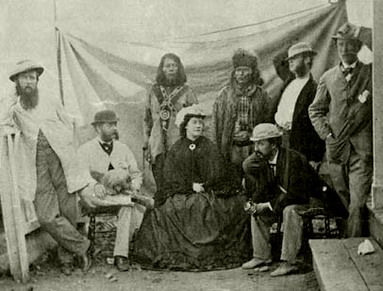
1865 col visit lillooet (2)Lillooet, 1865. Chiefs meet with representatives of Great Britain.1916 chiefs]Some of the Chiefs in this picture, 1916, signed the Declaration of the Lillooet Tribe. 

Seated (from left to right): Chief James Raitasket (Lillooet tribe, Upper Lillooet) Chief John Chelahitsa (Douglas Lake, tribe, Okanagan, Spences Bridge),Chief Paul David (Tobacco Plains tribe, Upper Kutenai, [Koosville]), Chief Basil David, (Bonaparte tribe, Shuswap). Standing (from left to right):Chief Elie Larue (Kamloops tribe, Shuswap), Chief John Tetlenitsa (Thompson), James Alexander Teit (Spences Bridge), Chief Thomas Adolph (LaFontaine tribe, Upper Lillooet), Chief William Pascal (Pemberton tribe, Lower Lillooet)

 We the underwritten Chiefs of the Lillooet tribe (being all the Chiefs of said tribe) declare as follows: –

We speak the truth, and we speak for our whole tribe, numbering about 1400 people at the present time.

 We claim that we are the rightful owners of our tribal territory, and everything pertaining thereto. 

 We have always lived in our country; at no time have we ever deserted it, or left it to others. 

 We have retained it from the invasion of other tribes at the cost of our blood. 

 Our ancestors were in possession of our country centuries before the whites ever came. 

 It is the same as yesterday when the latter came, and like the day before when the first fur trader came. 

 We are aware the B.C. government claims our country, like all other Indian territories in B.C.; but we deny their right to it. 

 We never gave it nor sold it to them. 

 They certainly never got the title to the country from us, neither by agreement nor conquest, and none other than us could have any right to give them title. 

 In early days we considered the white chiefs like a superior race that never lied nor stole, and always acted wisely, and honourably.  We expected they would lay claim to what belonged to themselves only. 

 In these considerations we have been mistaken and gradually have learned how cunning, cruel, untruthful, and thieving some of them can be. 

 We have felt keenly the stealing of our lands by the B.C. government, but we could never learn how to get redress. 

 We felt helpless and dejected; but lately we begin to hope. 

 We think that perhaps after all we may get redress from the greater white chiefs away in the King’s country, or in Ottawa.  It seemed to us all white chiefs and governments were against us, but now we commence to think we may get a measure of justice.

 We have been informed of the stand taken by the Thompson River, Shuswap, and Okanagan tribes, as per their declaration of July 16th, 1910.

 We have learned of the Indian Rights Association of B.C., and have also heard the glad news that the Ottawa government will help us to obtain our rights. 

 As we are in the same position in regard to our lands, etc., and labor under the same disadvantages as the other tribes of B.C., we resolved to join them in their movement for our mutual rights. 

 With this object, several of our chiefs attended the Indian meeting at Lytton on Feb. 13th, 1910, and again the meeting at Kamloops on the 6th of Feb. last.

 Thereafter we held a meeting ourselves at Lillooet on the 24th of Feb. last, when the chiefs of all Lillooet bands resolved as follows:

  First – That we join the other interior tribes affiliated with the Indian Rights Association of the Coast.

  Second – That we stand with them in the demand for their rights, and the settlement of the Indian land question.

  Third – That we agree unanimously with them in all the eight articles of their Declaration, as made at Spences Bridge, July, 1910.

  In conclusion, we wish to protest against the recent seizing of certain of our lands at “The Short Portage,” by white settlers on authority of the B.C. government. 

 These lands have been continually occupied by us from the time out of mind, and have been cultivated by us unmolested for over thirty years. 

 We also wish to protest against the building of railway depots and sidings on any of our reservations, as we hear is projected. 

We agree that a copy of this Declaration be sent each to the Hon. Mr. Oliver, the Superintendent of Indian Affairs, the Secretary of the Indian Rights Association, Mr. Clark, K.C., and Mr. McDonald, Inspector of Indian Agencies.

  (Signed)        James Nraiteskel, Chief Lillooet Band

                        James Stager, Chief Pemberton Band

                        Peter Chalal, Chief Mission Band

                        James James, Chief Seaton Lake Band

                        John Koiustghen, Chief Pasulko Band

                        David Eksiepalus, Chief No. 2 Lillooet Band

                        Charles Nekaula, Chief Nkempts Band

                        James Smith, Chief Tenas Lake Band

                        Harry Nkasusa, Chief Samakwa Band

                        Paul Koitelamugh, Chief Skookum Chuck Band

                        August Akstonkail, Chief Port Douglas Band

                        Jean Babtiste, Chief No. 1 Cayuse Creek Band

                        David Skwinstwaugh, Chief Bridge River Band

                        Thomas Bull, Chief Slahoos Band

                        Thomas Jack, Chief Anderson Lake Band

                        Chief Fransois

                        Thomas Adolph, for La Fountain Indians

                                    Spences Bridge, B.C. May 10th, 1911

Memorial to Frank Oliver, Minister of the Interior, 1911

03 Wednesday Sep 2014

Posted by Admin in Indigenous Declarations

≈ 1 Comment

MEMORIAL

To the Honourable Frank Oliver, Minister of the Interior, Ottawa


Dear sir and Chief,

We the undersigned Chiefs of the Shuswap, Couteau or Thompson, Okanagan, Lillooet, Stalo or Lower Fraser, Chilcotin, Carrier and Tahltan Tribes in the interior of British Columbia, assembled at Spences Bridge, BC, this tenth day of May, 1911, hereby greet you, and make known to you as follows:


            That in this letter we desire to speak to you heart to heart, and as man to man about those things which concern us most. We do not come to you with lies in our hearts, nor in any scheming way, but simply with plain statements of facts, and ask you to listen to us patiently. We do not wish to get the best of anybody, but just to obtain our rights, and the justice we believe we are entitled to. We ask for the same treatment that has been accorded to other Canadian Indians in the settlement of our land question, and in other matters. We know your government is strong, and has the power to treat us who are weak as it suits them; but we expect good and not evil from them. We regard you as a father appointed to look after our interests, that we may not be oppressed and imposed upon by others. We believe the settlement of our grievances will result in benefit to the whites of this country, as well as to us.

            You already know most of those grievances we complain of, and the position we take regarding them. Some of our chiefs have written you from time to time, and several have visited the government in Ottawa within the last ten years. Your government has received petitions and complaints from the chiefs of the Thompson Tribe in 1908 and 1909. the Declaration of the Shuswap, Thompson and Okanagan tribes, July 1910. The memorial of the same tribes presented to Sir Wilfred Laurier at Kamloops, August 1910. then Mr Mc Dougal, Special Commissioner, visited us twice and no doubt sent in a report to your government as to our condition. Consequently we need not reiterate everything here.

            You know how the BC Government has laid claim to all our tribal territories, and has practically taken possession of same without treaty, and without payment. You know how they also claim the reservations, nominally set apart for us. We want to know if we own any land at all in this country. As a last chance of settling our land question with the BC Government, we visited them in Victoria on the third of March last, and presented them with a petition (a copy of which we believe has been sent to your government), asking for a speedy settlement. Forty of us from the Interior waited on the government along with the Coast Indians. In this letter we wish to answer some of the statements made to us by the BC Government at this interview.

            Premier McBride, speaking for the BC Government, said “We Indians had no right or title to the unsurrendered lands of the province.” We can not possibly have rights in any surrendered lands, because in the first place they would not be ours if we surrendered them, and, secondly we have never surrendered any lands. This means that the BC Government asserts that we have no claim or title to the lands of this country. Our tribal territories which we have held from time immemorial, often at cost of blood, are ours no longer if Premier McBride is correct. We are all beggars, and landless in our own country. We told him through one of our chiefs we were of the opposite opinion from him, and claimed our countries as hitherto. We asked that the question between us be submitted for settlement to the highest courts, for how otherwise can it now be settled? His answer was: “there was no question to settle or submit to the courts.” Now, how can this be. That there is a question is self-evident, for Premier McBride takes one side of it, and we take the other. If there was no question, there would have been nothing to talk about; and nothing to take sides on. We wish to tell you, Chief, this question is very real to us.  It is a live issue. The soreness in our hearts over this matter has been accumulating these many years, and will not die until either we are all dead, or we obtain what we consider a just settlement. If a person takes possession of something belonging to you, surely you know it, and he knows it, and land is a thing which cannot be taken away, and hidden. We see it constantly, and everything done with it must be more or less in view. If we had had nothing, or the British Columbia Government had taken nothing from us, then there would be nothing to settle, but we had lands, and the British Columbia Government has taken them, and we want a settlement for them. Surely then, it is clear there is a question to be settled, and how is it to be settled except in the courts.

            Mr. McBride made the statement, “We Indians were well satisfied with our position, and that the present agitation among us was fomented by certain whites.” We deny this statement completely – it is not true. The fact of our visiting the Victoria Government – many of us from long distances, and at great expense – shows that we are not satisfied. As we have stated before, we never have at any time been entirely satisfied with our position, and now that the country is being more and more settled up, and we becoming more restricted in our liberties year by year, we are very far from satisfied. Why should we be satisfied? What have we received, and what has been done for us to make us satisfied? All the promises made to us when the whites first came to this country have been broken. Many of us were driven off our places where we had lived and camped from time immemorial, even places we cultivated, and where we raised food, because these spots were desirable for agriculture, and the Government wanted them for white settlers. This was done without agreement with us, and we received no compensation. It was also in direct opposition to the promises made to us by the first whites, and Government officials, that no white men would be allowed to locate on any place where Indians were settled or which were camping stations and gardens. Thus were we robbed by the Government and driven off many of our places by white settlers (backed by the Government), or coaxed off them with false promises. Then we were promised full freedom to hunt, fish and travel over our country unrestricted by the regulations of the whites, until such time as out lands were purchased or at least until treaties were made with us. Another promise broken, and so on with all. We can tell you all of them if you want to know, and prove them through witnesses still living. What of the Governor Seymour’s promises made to the Lower Fraser Indians who convened at his request purposely to hear his message to them concerning the proposed policy of the whites towards the Indians of this country? They rank with the other early promises – all broken. This is enough to show there is sufficient reason for our dissatisfaction, and also that it required no white men to point out these things to us, and urge us to be dissatisfied. Even if it be true that certain white men help us at the present day in our agitation to obtain our rights by doing writing for us, etc., why should McBride find fault with them. Did not Governor Seymour and other great men of the Province in early days state to us that the whites had come here to help us and be brothers to us? Why should he denounce these men for doing what his predecessors, and, we believe, also the Queen, said was the right thing to do? We have learned that most whites do not keep their word (especially when it is not written word). Only those very few whites who help us appear to be trying to keep the white man’s promises made to us by the white chiefs of this country in early days. They alone appear to uphold the honour of their race. We assure you, Chief, the present agitation among us over these matters is simply the culmination of our dissatisfaction which has been growing with the years. With changing conditions, greater pressure and increasing restrictions put on us, we had at last to organize, and agitate. Either this, or go down and out, for our position has been gradually becoming unbearable. We have not been hasty. It has never been our policy to jump at conclusions. We have never believed in acting without full knowledge, nor making charges without full proof. Although we have known, yet we have waited a long time for the hand of the British Columbia Government to be shown so we could read it without any doubt. Some of our chiefs, distrustful and impatient, many time during these long years, one way and another, through the Indian office, through Victoria, through Ottawa and in other ways, have attempted to get matters concerning us straightened, but they have always been baffled in their efforts. Others, hopeless and disgusted, would not try. Then we were ignorant and groping in the dark: now we are more enlightened and can see things clearer. Like conditions drove us of the Interior, and the Indians of the Coast, to organize and agitate independently, and unknown to each other. It is only lately we have joined forces to try and obtain a settlement of all questions concerning us. Mr. McBride gave a partial explanation of how the Reserve System of British Columbia originated. This does not concern us. What we know and are concerned with is the fact that the British Columbia Government has already taken part of our lands without treaty with us, or payment of compensation, and has disposed of them to settlers and others. The remaining lands of the country, the Government lays claim to as their property, and ignores our title. Out of our lands they reserved small pieces here and there, called Indian Reserves, and allowed us the occupancy of them. These even they claim as their property, and threaten in some places to take away from us, although we have been in continuous occupancy and possession. No proper understanding was arrived at, nor proper agreements made between ourselves and the British Columbia Government, when the reserves were laid off. Not one of us understood this matter clearly nor in the same light the British Columbia Government seems to have done. Things were not explained to us fully, and the Government’s motives seem to have been concealed, for they were understood differently by the various chiefs. We never asked for part of our country to be parceled out in pieces and reserved for us. It was entirely a government scheme originating with them. We always trusted the Government, as representing the Queen, to do the right thing by us, therefore we never have opposed any proposition of the Government hastily and without due consideration. We thought, although things appear crooked, still in the end or before long they might become straight. Today were the like to occur, or any proposition be made to us by the Government, we would not trust them: we would demand a full understanding of everything, and that all be made subjects of regular treaty between us and them. Mr. McBride claimed many reserves are larger than the Indians need, and much of the land remains unoccupied. We of the Interior claim this is not so. We think at least we should have as much land of our own country to farm as is allowed to white settlers (viz.: 160 acres), or as much as our Indian friends of Eastern Washington, Idaho and Montana retain on the opening of their reserves (viz: From 80 to 160 acres of the best agricultural land available, chosen by themselves, for each man, woman and child). At the time the Indian Reserves of British Columbia Government allowed 320 acres of land to each white person pre-empting land from them. As at this time our population was much greater than now, the amount of reservation land per capita would be small in proportion, and the farce of the Reserves being adequate when set apart all the more apparent. We ask Mr. McBride to state the amount of good land in the Reserves which can be successfully cultivated by us under present conditions. Why should we be expected to make a good living on four or five acres of land, whilst in 1881 and later 320 acres was deemed none too much for a white man? Pasture need not be taken into consideration at that date, as then the unfenced range country formed a sufficient pasturage, and was used equally as much by whites as by Indians. A few of the reserves may appear large on paper, but what amount of good land is in them? Most of them consist chiefly of more or less barren side hills, rock slides, timbered bottoms hard to clear, and arid flats devoid of water for irrigation. In very few places do we have any chance to have good farms, and they must of necessity be small in area. Either the land or the water is lacking. In many places even the total acreage of the reserves is exceedingly small. All parts of all reserves known to us are used by us one way and another as fully as possible, considering our present disadvantageous position, and the nature of the lands. If by occupancy Mr. McBride means actual living on or cultivating of each part of reserve then we plead guilty to our inability to occupy the greater part of them, for we cannot live on and cultivate rocks, side hills and places where we can get no water. Even in may places that we do occupy fully, and cultivate continually, we lose our drops altogether, or in part, every year, owing to whites taking the irrigation water, and stopping us from using it when we most require it under the claim of prior rights to the water. In this they are sustained by the British Columbia Government who recognize their water records as superior to ours. Mr. McBride also said the Indians share in enjoying the advantages arising from building of railroads, wagon roads, trails and other Government utilities. Perhaps we do, but we have not assisted in building them, and have they not been built up from the direct robbery of ourselves, and our country? We claim these things are rightfully ours, and yet we are made to pay for using them. Had we never assisted in the making of these railways and roads: had this Government paid us for all the timber that was used, and all our fifty millions of gold taken out of this country, and all our salmon that has been caught, and destroyed, and many other things which might be mentioned that went into the making of these roads; had we been paid only a small share of all this wealth derived from the destruction (in most cases), not the improvement of our country; or had the country been bought from us, so it were actually the property of the whites to destroy or do with as they pleased, then the British Columbia Government might speak of our sharing in the benefits of roads to which they infer we are in no way entitled. Good trails we had in plenty before the whites came. The whites are indebted to us for having them ready made when they came, and allowing them to use them without charge. The wagon roads benefit us but little, for most of them do not go to our reserves, and besides, we have no chance to have much produce to haul over them. Railroads have not helped us much. They cut up our little farms, and give us no adequate compensation. They have killed many of us, and also many of our horses and cattle since advent. Besides they act as highways for robber whites, and all kinds of broken men who frequently break into our houses and steal from us.

            We never asked that any of these things be built so we could share in them, and we well know they were not built for our benefit. Government utilities such as the police, for instance; we see no benefit in, for they are used to force laws on us we never agreed to, and some of which we consider injurious and unjust. This, then, appears to be all the British Columbia Government can claim to have done for us, viz: They let us use a few inferior spots of our own country to live on, and say we ought to be greatful to them for giving us such large places. They made some roads of various kinds for themselves, and say we ought to be grateful for being allowed to share in the use of them. We ask is this the brotherly help that was promised us in early days, or is it their compensation to us for the spoliation of our country, stealing of our lands, water, timber, pastures, our game, fish, roots, fruits, etc., and the introduction of diseases, poverty, hard labour, jails, unsuitable laws, whisky and every so many other things injurious to us?

            Now you have the British Columbia Government’s statements re these questions, and you have our statements. We leave it to you to decide who has done wrong. We or they. We desire a complete settlement of our whole land question, and the making of treaties which will cover everything of moment to us in our relations between the whites of this country as represented by their Governments, and we as Indian tribes. As the British Columbia Government through Mr. McBride has refused to consider any means of settling these matters legally, we call on the Dominion Government at Ottawa – the central and supreme Government of Canada – to have the questions of title to our lands of this country brought into court and settled. We appeal to you for what we consider justice, and what we think you would yourself consider justice if you were in our position. Who has the power to help us in this matter? Only the Federal Government, and we look to them. As the building of railways, and settlement in this country is proceeding at a rapid pace, we wish to press on you the desirability (for the good of all concerned) of having these matters adjusted at as early a date as possible. In the hope that you will listen to our earnest appeal, we, the underwritten chiefs, subscribe our names in behalf of our people.


John Chilahitsa, Chief Douglas Lake Band, Okanagan Tribe

Babtiste Chianut, Chief N’kamip Band, Okanagan Tribe

John Leokomaghen, Chief Ashnola Band, Okanagan Tribe

Charles Allison, Chief Hedley Band, Okanagan Tribe

Francois Pakelpitsa, Representative Penticton Band, Okanagan Tribe

Babtiste Logan, Chief Vernon Band, Okanagan Tribe

John Inhamchin, Chief Chopaca Band, Okanagan Tribe

Alexander Chilahitsa, Hereditary Head Chief, Okanagan Tribe

Louis Chlechlechken, Chief Kamloops Band, Shuswap Tribe

Basil David, Chief Bonaparte Band, Shuswap Tribe

Francois Selpachen, Chief Shuswap Lake Band, Shuswap Tribe

Baptiste William, Chief Williams Lake Band, Shuswap Tribe

Samson Soghomich, Chief Alkali Lake Band, Shuswap Tribe

James Capel, Chief Clinton Band, Shuswap Tribe

Thomas Petlamitsa, Chief Dead Man’s Creek Band, Shuswap Tribe

Major Cheschetselst, Chief Leon Creek Band, Shuswap Tribe

Antoine Chelahautken, for Chief Etienne, Chase Band, Shuswap Tribe

Joseph Istchukwakst, Chief High Bar Band, Shuswap Tribe

Frank Tahmesket, for Chief Samuel, Canim Lake Band, Shuswap Tribe

Looshom, Chief Soda Creek Band, Shuswap Tribe

August James, for Chief Keximin, Halowt Band, Shuswap Tribe

Andre, Chief North Thompson Band, Shuswap Tribe

Louis Chuieska, Captain Spallumcheen Band, Shuswap Tribe

John Inroiesket, Acting Chief Canoe Creek Band, Shuswap Tribe

Joseph Tseopiken, Chief Dog Creek Band, Shuswap Tribe

Adolphe Thomas, for Chief Dennis Skelepautken, Fountain Band,

Robert Kustaselkwa, Chief Pavillion Band

John Nelson, Chief Quesnel Band, Carrier Tribe

James Inraitesket, Chief Lillooet Band, Lillooet Tribe

James James, Chief Seaton Lake Band, Lillooet Tribe

John Koiustchen, Chief Pasulko Band, Lillooet Tribe

David Eksiepalus, Chief Zezil No. 2, Lillooet Band, Lillooet Tribe

James Stager, Chief Pemberton Band, Lillooet Tribe

Charles Nekaula, Chief Nkempts Band, Lillooet Tribe

James Smith, Tenas Lake Band, Lillooet Tribe

Harry Inkasusa, Chief Samakwa Band, Lillooet Tribe

Paul Roitelanugh, Chief Skookum Chuck Band, Lillooet Tribe

August Akstonkail, Chief Port Douglas Band, Lillooet Tribe

Jean Baptiste, Chief No 1., Cayuse Creek Band, Lillooet Tribe

David Skwinstwaugh, Chief Bridge River Band, Lillooet Tribe

Peter Chalal, Chief Mission Band, Lillooet Tribe

Thomas Bull, Chief Slahoos Band, Lillooet Tribe

Thomas Jack, Chief Anderson Lake Band, Lillooet Tribe

Simo Nizde, Representative Anaheim Band, Chilcotin Tribe


Memorial to Wilfred Laurier, 1910

03 Wednesday Sep 2014

Posted by Admin in Indigenous Declarations

≈ 1 Comment

This Memorial was written on the occasion of Canada’s Prime Minister, Laurier, visiting Kamloops and Prince Rupert in 1910. It was written by the Secwepemc, Nlaka’pamux (Thompson / Couteau), and Okanagan leaders and witnessed by over 80 other chiefs who had gathered in Spences Bridge to meet about the issues raised in this Memorial. 

Dear Sir and Father,

We take this opportunity of your visiting Kamloops to speak a few words to you. We welcome you here, and we are glad we have met you in our country. We want you to be interested in us, and to understand more fully the conditions under which we live. We expect much of you as the head of this great Canadian Nation, and feel confident that you will see that we receive fair and honorable treatment. Our confidence in you has increased since we have noted of late the attitude of your government towards the Indian rights movement of this country and we hope that with your help our wrongs may at last be righted. We speak to you the more freely because you are a member of the white race with whom we first became acquainted, and which we call in our tongue “real whites.”

One hundred years next year they came amongst us here at Kamloops and erected a trading post. After the other whites came to this country in 1858 we differentiated them from the first whites as their manners were so much different, and we applied the term “real whites” to the latter (viz., the fur-traders of the Northwest and Hudson Bay companies. As the great majority of the companies’ employees were French speaking, the term latterly became applied by us as a designation for the whole French race.) The “real whites” we found were good people. We could depend on their word, and we trusted and respected them. They did not interfere with us nor attempt to break up our tribal organizations, laws, customs. They did not try to force their conceptions of things on us to our harm. Nor did they stop us from catching fish, hunting, etc. They never tried to steal or appropriate our country, nor take our food and life from us. They acknowledged our ownership of the country, and treated our chiefs as men. They were the first to find us in this country. We never asked them to come here, but nevertheless we treated them kindly and hospitably and helped them all we could. They had made themselves (as it were) our guests.

We treated them as such, and then waited to see what they would do.

As we found they did us no harm our friendship with them became lasting. Because of this we have a ‘warm heart to the French at the present day.’ We expect good from Canada.

When they first came among us there were only Indians here. They found the people of each tribe supreme in their own territory, and having tribal boundaries known and recognized by all. The country of each tribe was just the same as a very large farm or ranch (belonging to all the people of the tribe) from which they gathered their food and clothing, etc., fish which they got in plenty for food, grass and vegetation on which their horses grazed and the game lived, and much of which furnished materials for manufactures, etc., stone which furnished pipes, utensils, and tools, etc., trees which furnished firewood, materials for houses and utensils, plants, roots, seeds, nuts and berries which grew abundantly and were gathered in their season just the same as the crops on a ranch, and used for food; minerals, shells, etc., which were used for ornament and for plants, etc., water which was free to all. Thus, fire, water, food, clothing and all the necessaries of life were obtained in abundance from the lands of each tribe, and all the people had equal rights of access to everything they required. You will see the ranch of each tribe was the same as its life, and without it the people could not have lived.

Just 52 years ago the other whites came to this country. They found us just the same as the first or “real whites” had found us, only we had larger bands of horses, had some cattle, and in many places we cultivated the land. They found us happy, healthy, strong and numerous. Each tribe was still living in its own “house” or in other words on its own “ranch.” No one interfered with our rights or disputed our possession of our own “houses” and “ranches,” viz., our homes and lives. We were friendly and helped these whites also, for had we not learned the first whites had done us no harm? Only when some of them killed us we revenged on them. Then we thought there are some bad ones among them, but surely on the whole they must be good. Besides they are the queen’s people. And we had already heard great things about the queen from the “real whites.” We expected her subjects would do us no harm, but rather improve us by giving us knowledge, and enabling us to do some of the wonderful things they could do. At first they looked only for gold. We know the latter was our property, but as we did not use it much nor need it to live by we did not object to their searching for it. They told us, “Your country is rich and you will be made wealthy by our coming. We wish just to pass over your lands in quest of gold.” Soon they saw the country was good, and some of them made up their minds, to settle it. They commenced to take up pieces of land here and there. They told us they wanted only the use of these pieces of land for a few years, and then would hand them back to us in an improved condition; meanwhile they would give us some of the products they raised for the loan of our land. Thus they commenced to enter our “houses,” or live on our “ranches.” With us when a person enters our house he becomes our guest, and we must treat him hospitably as long as he shows no hostile intentions. At the same time we expect him to return to us equal treatment for what he receives. Some of our Chiefs said, “These people wish to be partners with us in our country. We must, therefore, be the same as brothers to them, and live as one family. We will share equally in everything—half and half—in land, water and timber, etc. What is ours will be theirs, and what is theirs will be ours. We will help each other to be great and good.”

The whites made a government in Victoria—perhaps the queen made it. We have heard it stated both ways. Their chiefs dwelt there. At this time they did not deny the Indian tribes owned the whole country and everything in it. They told us we did. We Indians were hopeful. We trusted the whites and waited patiently for their chiefs to declare their intentions toward us and our lands. We knew what had been done in the neighboring states, and we remembered what we had heard about the queen being so good to the Indians and that her laws carried out by her chiefs were always just and better than the American laws. Presently chiefs (government officials, etc.) commenced to visit us, and had talks with some of our chiefs. They told us to have no fear, the queen’s laws would prevail in this country, and everything would be well for the Indians here. They said a very large reservation would be staked off for us (southern interior tribes) and the tribal lands outside of this reservation the government would buy from us for white settlement. They let us think this would be done soon, and meanwhile until this reserve was set apart, and our lands settled for, they assured us we would have perfect freedom of traveling and camping and the same liberties as from time immemorial to hunt, fish, graze and gather our food supplies where we desired; also that all trails, land, water, timber, etc., would be as free of access to us as formerly. Our chiefs were agreeable to these propositions, so we waited for these treaties to be made, and everything settled. We had never known white chiefs to break their word so we trusted. In the meanwhile white settlement progressed. Our chiefs held us in check. They said, “Do nothing against the whites. Something we did not understand retards them from keeping their promise. They will do the square thing by us in the end.”

What have we received for our good faith, friendliness and patience? Gradually as the whites of this country became more and more powerful, and we less and less powerful, they little by little changed their policy towards us, and commenced to put restrictions on us. Their government or chiefs have taken every advantage of our friendliness, weakness and ignorance to impose on us in every way. They treat us as subjects without any agreement to that effect, and force their laws on us without our consent and irrespective of whether they are good for us or not. They say they have authority over us. They have broken down our old laws and customs (no matter how good) by which we regulated ourselves. They laugh at our chiefs and brush them aside. Minor affairs amongst ourselves, which do not affect them in the least, and which we can easily settle better than they can, they drag into their courts. They enforce their own laws one way for the rich white man, one way for the poor white, and yet another for the Indian. They have knocked down (the same as) the posts of all the Indian tribes. They say there are no lines, except what they make. They have taken possession of all the Indian country and claim it as their own. Just the same as taking the “house” or “ranch” and, therefore, the life of every Indian tribe into their possession. They have never consulted us in any of these matters, nor made any agreement, “nor” signed “any” papers with us. They ‘have stolen our lands and everything on them’ and continue to use ‘same’ for their ‘own’ purposes. They treat us as less than children and allow us ‘no say’ in anything. They say the Indians know nothing, and own nothing, yet their power and wealth has come from our belongings. The queen’s law which we believe guaranteed us our rights, the B.C. government has trampled underfoot. This is how our guests have treated us—the brothers we received hospitably in our house.

After a time when they saw that our patience might get exhausted and that we might cause trouble if we thought all the land was to be occupied by whites they set aside many small reservations for us here and there over the country. This was their proposal not ours, and we never accepted these reservations as settlement for anything, nor did we sign any papers or make any treaties about same. They thought we would be satisfied with this, but we never have been satisfied and never will be until we get our rights. We thought the setting apart of these reservations was the commencement of some scheme they had evolved for our benefit, and that they would now continue until they had more than fulfilled their promises but although we have waited long we have been disappointed. We have always felt the injustice done us, but we did not know how to obtain redress. We knew it was useless to go to war. What could we do? Even your government at Ottawa, into whose charge we have been handed by the B.C. government, gave us no enlightenment. We had no powerful friends. The Indian agents and Indian office at Victoria appeared to neglect us. Some offers of help in the way of agricultural implements, schools, medical attendance, aid to the aged, etc., from the Indian department were at first refused by many of our chiefs or were never petitioned for, because for a time we thought the Ottawa and Victoria governments were the same as one, and these things would be charged against us and rated as payment for our land, etc. Thus we got along the best way we could and asked for nothing. For a time we did not feel the stealing of our lands, etc., very heavily. As the country was sparsely settled we still had considerable liberty in the way of hunting, fishing, grazing, etc., over by far the most of it. However, owing to increased settlement, etc., in late years this has become changed, and we are being more and more restricted to our reservations which in most places are unfit or inadequate to maintain us. Except we can get fair play we can see we will go to the wall, and most of us be reduced to beggary or to continuous wage slavery. We have also learned lately that the British Columbia government claims absolute ownership of our reservations, which means that we are practically landless. We only have loan of those reserves in life rent, or at the option of the B.C. government. Thus we find ourselves without any real home in this our own country.

In a petition signed by fourteen of our chiefs and sent to your Indian department, July, 1908, we pointed out the disabilities under which we labor owing to the inadequacy of most of our reservations, some having hardly any good land, others no irrigation water, etc., our limitations re pasture lands for stock owing to fencing of so-called government lands by whites; the severe restrictions put on us lately by the government re hunting and fishing; the depletion of salmon by over-fishing of the whites, and other matters affecting us. In many places we are debarred from camping, traveling, gathering roots and obtaining wood and water as heretofore. Our people are fined and imprisoned for breaking the game and fish laws and using the same game and fish which we were told would always be ours for food. Gradually we are becoming regarded as trespassers over a large portion of this our country. Our old people say, “How are we to live? If the government takes our food from us they must give us other food in its place.” Conditions of living have been thrust on us which we did not expect, and which we consider in great measure unnecessary and injurious. We have no grudge against the white race as a whole nor against the settlers, but we want to have an equal chance with them of making a living. We welcome them to this country. It is not in most cases their fault. They have taken up and improved and paid for their lands in good faith. It is their government which is to blame by heaping up injustice on us. But it is also their duty to see their government does right by us, and gives us a square deal. We condemn the whole policy of the B.C. government towards the Indian tribes of this country as utterly unjust, shameful and blundering in every way. We denounce same as being the main cause of the unsatisfactory condition of Indian affairs in this country and of animosity and friction with the whites. So long as what we consider justice is withheld from us, so long will dissatisfaction and unrest exist among us, and we will continue to struggle to better ourselves. For the accomplishment of this end we and other Indian tribes of this country are now uniting and we ask the help of yourself and government in this fight for our rights. We believe it is not the desire nor policy of your government that these conditions should exist. We demand that our land question be settled, and ask that treaties be made between the government and each of our tribes, in the same manner as accomplished with the Indian tribes of the other provinces of Canada, and in the neighboring parts of the United States. We desire that every matter of importance to each tribe be a subject of treaty, so we may have a definite understanding with the government on all questions of moment between us and them. In a declaration made last month, and signed by twenty-four of our chiefs (a copy of which has been sent to your Indian department) we have stated our position on these matters. Now we sincerely hope you will carefully consider everything we have herewith brought before you and that you will recognize the disadvantages we labor under, and the darkness of the outlook for us if these questions are not speedily settled. Hoping you have had a pleasant sojourn in this country, and wishing you a good journey home, we remain

Yours very sincerely,

The Chiefs of the Shuswap, Okanagan and Couteau or Thompson tribes

– Per their secretary, J.A. Teit

Declaration of the Tahltan Tribe, 1910 

03 Wednesday Sep 2014

Posted by Admin in Indigenous Declarations

≈ 1 Comment

We, the undersigned members of the Tahltan tribe, speaking for ourselves, and our entire tribe, hereby make known to all whom it may concern, that we have heard of the Indian Rights movement among the Indian tribes of the Coast, and of the southern interior of B.C.. Also we have read the Declaration made by the chiefs of the southern interior tribes at Spences Bridge on the 16th July last, and we hereby declare our complete agreement with the demands of same, and with the position taken by the said chiefs, and their people on all the questions stated in the said Declaration, and we furthermore make known that it is our desire and intention to join with them in the fight for our mutual rights, and that we will assist in the furtherance of this object in every way we can, until such time as all these matters of moment to us are finally settled. We further declare as follows:—


Firstly—We claim the sovereign right to all the country of our tribe—this country of ours which we have held intact from the encroachments of other tribes, from time immemorial, at the cost of our own blood. We have done this because our lives depended on our country. We have never treated with them, nor given them any such title. (We have only very lately learned the B.C. government makes this claim, and that it has for long considered as its property all the territories of the Indian tribes in B.C.)


Secondly--We desire that a part of our country, consisting of one or more large areas (to be erected by us),be retained by us for our own use, said lands and all thereon to be acknowledged by the government as our absolute property. The rest of our tribal land we are willing to relinquish to the B.C. government for adequate compensation.


Thirdly—We wish it known that a small portion of our lands at the mouth of the Tahltan river, was set apart a few years ago by Mr. Vowell as an Indian reservation. These few acres are the only reservation made for our tribe. We may state we never applied for the reservation of this piece of land, and we had no knowledge why the government set it apart for us, nor do we know exactly yet.


Fourthly–-We desire that all questions regarding our lands, hunting, fishing, etc., and every matter concerning our welfare, be settled by treaty between us and the Dominion and B.C. governments.


Fifthly—We are of the opinion it will be better for ourselves, also better for the governments and all concerned, if these treaties are made with us at a very early date, so all friction, and misunderstanding between us and the whites may be avoided, for we hear lately much talk of white settlement in the region, and the building of railways, etc., in the near future.


Signed at Telegraph Creek, B.C., this eighteenth day of October, nineteen hundred and ten, by

Nanok, Chief of the Tahltans

Nastulta, alias Little Jackson

George Assadza, Kenetl, alias Big Jackson

and eighty other members of the tribe

The Declaration of the Indian Chiefs in the Southern Interior of British Columbia, 1910

03 Wednesday Sep 2014

Posted by Admin in Indigenous Declarations

≈ 2 Comments

Chiefs from the Southern Interior met at Spences Bridge in 1910, to study the demands of the Indian Rights Association of BC. The Interior Chiefs decided to affiliate with the coast Indian Rights Association and stand with them to demand certain rights for Indian people and a settlement of the land issue. But the Chiefs also under- stood how important it was for them to carefully define, and speak for, their own concerns. They had Teit write it all down in point-by point form so it could be easily distributed. The points were made in the form of a declaration and dated the 16th day of July, 1910.

The DECLARATION OF THE INDIAN CHIEFS IN THE SOUTHERN INTERIOR OF BC

To Whom It May Concern:

We, the underwritten Chiefs of Indian Bands in the Southern Interior of British Columbia, hereby make known our position in regard to the question of Indian rights, and the policy of the Indian Rights Association of BC, as follows:

First, we stand for treaty rights with the dominion government, the same as all the Indian tribes in the other provinces of Canada, and that all matters of present importance to the people of each of our tribes be subject to these treaties, so that we shall have a definite understanding regarding lands, water, timber, game, fish, etc., and we consider such matters as schools, doctors, aid to the aged, Indian funds, etc., and general assistance by the government should also be included in these treaties.

Second, we stand for compensation to us by the British Columbia government for all lands of ours appropriated, or held by them, including all lands preempted or bought by settlers, miners, lumbermen, etc.

Third, we stand for the enlargement of our reservations wherever we consider it necessary, by having a sufficiency of land allotted to us so as to enable us to compete on better terms with whites in the way of making a living.

Fourth, we stand for the obtaining of a permanent and secure title (to be acknowledged by the government as such) of our ownership of our present reservations, and of such lands as may be added thereto.

Fifth, we stand for the carrying of our claims before the Privy Council of England for settlement, and in the event of our obtaining justice as we expect, we ask such compensation as may be awarded us for our lands, etc., shall be paid to us, half in cash, and the other half to be retained by the dominion government, and used as occasion may require for our benefit.

Sixth, we ask for and expect the dominion government to support us in our claims, and help us to obtain our rights to the best of their ability.

Seventh, we believe the Indian Rights Association of BC (which has been formed by other Indians of this country) has the same object and claims that we stand for, therefore we declare our agreement with the members of the same, and our resolve to join them, and support them in the furtherance of our mutual interests, and the attainment of our rights.

Eighth, we believe that the Indian Rights Association of BC has hired Mr. Clark, K.C., of Toronto, to look after their interests and conduct their case in harmony with their desires, and those of the dominion government, and we hereby declare our agreement with this step, and our intention to support it financially and otherwise, as well as we are able.

Petition of the Chiefs of the Lower Fraser, 1874

03 Wednesday Sep 2014

Posted by Admin in Indigenous Declarations

≈ 1 Comment

In the context of a new British Columbia colony under the dreadful influence of Chief commissioner of Lands and Works, Joseph Trutch, and in the situation where the same Commissioner completely disposed of the instructions of the previous Governor, James Douglas, and started dramatically reducing Indian Reserves to suit colonial expansion, Chiefs from Douglas Portage at the Head of Harrison Lake to the Bute Inlet, nearly at the northern tip of Vancouver Island, wrote a petition to the Superintendent of Indian Affairs of Canada.

The new colonial administration had taken the approach of reducing reserves to ten acres per family head, or adult male. Governor Douglas had previously followed an agreed policy with the Colonial Secretary of England to demarcate as much land as any Indian community should recommend to be their Reserve. Truth overthrew this policy with the stroke of a pen, at a critical moment in the land interests of the Shuswap at Kamloops and Adams Lake. Because the vast Reserve visited by Commissioner Cox, some several square hundred miles along the Shuswap River, was seen to be inconvenient to the use of the river as the central route of transportation for the colony to the New Caledonia lines, Trutch simply stated to his government representatives that Cox had got it wrong and couldn’t possibly be serious about reserving such a large area. At this time he personally authored the policy of reserving as little land as possible.

The Privy Council had sent two official reports to the Commissioner of Lands and Works, indicating that no less than twenty acres must be allocated per family, and also their dissatisfaction with the complaints from the Indians that they were being encroached upon by settlers.


Peter Ayessik to the Superintendent of Indian Affairs

New Westminster, July 14th, 1874.

SIR, – Having been, along with some others, commissioned by the Chiefs to present our common petition to you, we have come down to New Westminster yesterday, and, after consultation, we came to the conclusion to send the petition by mail.

            You have told Alexis and myself not to go down till you send notice.

            We expect to hear from you, through Rev. Father Durieu, at New Westminster.

                        I have, &c.,

            (Signed) Peter Ayessik, Chief of Hope.


To the Indian Commissioner for the Province of British Columbia: –

            The petition of the undersigned, Chiefs of Douglas Portage, of Lower Fraser, and of the other tribes on the seashore of the mainland to Bute Inlet, humbly sheweth: –

  1. That your petitioners view, with a great anxiety, the standing question of the quantity of land to be reserved for the use of each Indian family.
  2. That we are fully aware that the Government of Canada has always taken good care of the Indians, and treated them liberally, allowing more than one hundred acres per family; and we have been at a loss to understand the views of the Local Government of British Columbia, in curtailing our land so much as to leave, in many instances, but few acres of land per family.
  3. Our hearts have been wounded by the arbitrary way the Local Government of British Columbia have dealt with us in locating and dividing our Reserves. Chamiel, ten miles below Hope, is allowed 488 acres of good land for the use of twenty families: at the rate of 24 acres per family; Popkum, eighteen miles below Hope, is allowed 369 acres of good land for the use of their families: at the rate of 90 acres per family; Cheam, twenty miles below Hope, is allowed 375 acres of bad, dry and mountainous land for the use of twenty-seven families: at the rate of 13 acres per family; Yuk-Yuk-y-yoose, on Chilliwack River, with a population of seven families, is allowed 42 acres: 5 acres per family; Sumass, at the junction of Sumass River and Fraser, with a population of seventeen families, is allowed 43 acres of meadow for their hay, and 32 acres of dry land; Keatsy, numbering more than one hundred inhabitants, is allowed 108 acres of land. Langley and Hope have not yet got land secured to them, and white men are encroaching on them on all sides.
  4. For many years we have been complaining of the land left us being too small. We have laid our complaints before Government officials nearest to us; they sent us to some others; so we had no redress up to the present; and we have felt like men trampled on, and are commencing to believe that the aim of the white men is to exterminate us as soon as they can, although we have always been quiet, obedient, kind and friendly to the whites.
  5. Discouragement and depression have come upon our people. Many of them have given up the cultivation of land, because our gardens have not been protected against the encroachment of the whites. Some of our best men have been deprived of the land they had broken and cultivated with long and hard labour, a white man enclosing it in his claim, and no compensation given. Some of our most enterprising men have lost part of their cattle, because white men had taken the place where those cattle were grazing, and no other place left but the thickly timbered land, where they die fast. Some of our people are now obliged to cut rushes along the bank of the river with their knives during winter to feed their cattle.
  6. We are now obliged to clear heavy timbered land, all prairies having been taken from us by white men. We see our white neighbours cultivate wheat, peas, &c., and raise large stocks of cattle on our pasture lands, and we are giving them our money to buy the flour manufactured from the wheat they have grown on the same prairies.
  7. We are not lazy and roaming-about people, as we used to be. We have worked hard and a long time to spare money to buy agricultural implements, cattle, horses, etc., as nobody has given us assistance. We could point out many of our people who have, those past years, bought, with their own money, ploughs, harrows, yokes of oxen, and horses; and now, with your kind assistance, we have a bright hope to enter into the path of civilization.
  8. We consider that 80acres per family is absolutely necessary for our support, and for the future welfare of our children. We declare that 20 or 30 acres of land per family will not give satisfaction, but will create ill feelings, irritation amongst our people, and we cannot say what will be the consequence.
  9. That, in case you cannot obtain from the Local Government the object of our petition, we humbly pray that this our petition be forwarded to the Secretary of State for the Provinces, Ottawa.

            Therefore your petitioners humbly pray that you may take this our petition into consideration and see that justice be done us, and allow each family the quantity of land we ask for.

            And your petitioners, as in duty bound, will ever pray.

                        (Signed)          Peter Ayesik, Chief of Hope,

                                                And 109 others.


I hereby testify that the Chiefs above referred to met together in my presence, and the above petition is the true expression of their feeling and of their wishes.

                        (Signed)          Peter Ayessik, Chief of Hope


Newer posts →

Subscribe

  • Entries (RSS)
  • Comments (RSS)

Archives

  • December 2025
  • October 2025
  • June 2025
  • May 2025
  • February 2025
  • September 2024
  • August 2024
  • July 2024
  • April 2024
  • March 2024
  • February 2024
  • September 2023
  • August 2023
  • June 2023
  • June 2018
  • December 2017
  • July 2017
  • January 2017
  • December 2016
  • July 2015
  • March 2015
  • February 2015
  • January 2015
  • December 2014
  • September 2014

Categories

  • Archive Quarterly
  • BC treaty process
  • Children
  • Commentary, editorial
    • Uncategorized
  • Comprehensive Claims – Policy and Protest
    • aboriginal title
  • Government Commissions
  • Gustafsen Lake Standoff 1995 – Ts'peten Defense, Secwepemc
  • Haida title
  • Indian Residential School
  • Indigenous Declarations
  • Non-Status Indian Era
  • Reconciliation
  • Roadblock
  • UN Engagement
  • Union of BC Indian Chiefs

Meta

  • Create account
  • Log in

Blog at WordPress.com.

  • Subscribe Subscribed
    • The West Wasn't Won
    • Already have a WordPress.com account? Log in now.
    • The West Wasn't Won
    • Subscribe Subscribed
    • Sign up
    • Log in
    • Report this content
    • View site in Reader
    • Manage subscriptions
    • Collapse this bar
 

Loading Comments...