Tags
Aboriginal fishing rights, BC Aboriginal Peoples Fisheries Commission, Canada, Cumulative Effects Framework, DFO, hunting moratorium, Indigenous Peoples, Roadblock, Ruby Dunstan, Sparrow, Stein Valley, Strategic Words and Tactics Team, traditional salmon fisheries, United Nations, World Council of Indigenous Peoples
Journal of “the west wasn’t won” archive project
FALL FEATURES:
Stein Valley and the Voices for the Wilderness
The Nlaka’pamux and St’at’imc nations first declared protection of the entire area in 1985.
A decade of organizing; profile-raising concert festivals; and unflinching determination at endless negotiations with government resulted in the Stein Valley Nlaka’pamux Heritage Park and an unspoiled wilderness.
Here, Chiefs Ruby Dunstan and Byron Spinks of Lytton share their roles, then and now, and personal connections to the Stein.
Park Board member John Haugen explains a little about the UNESCO process for World Heritage Site designation, and Vancouver-based sound ecologist Hildegard Westerkamp shares her photos and recollections of the first festival in the alpine.
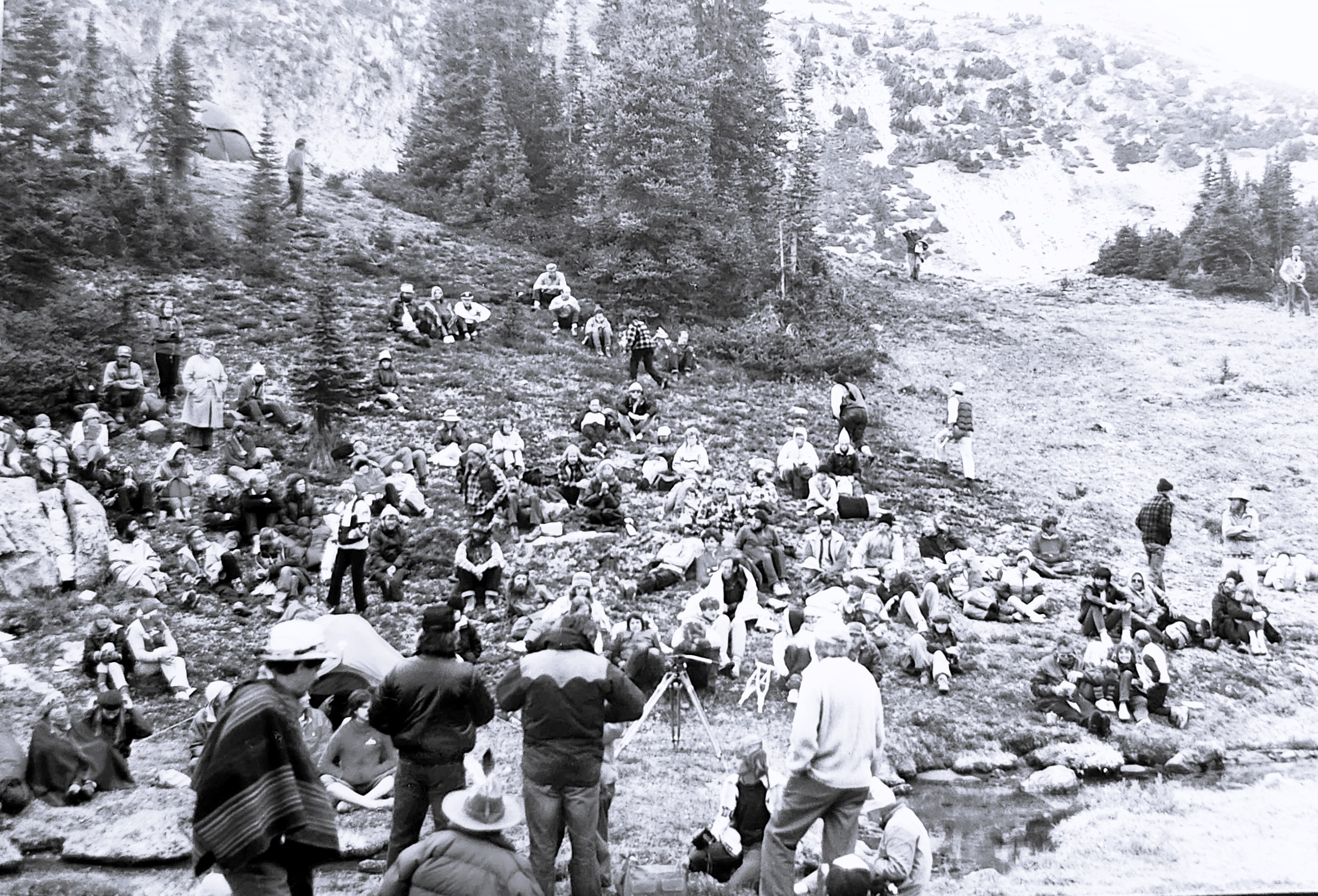
At the first Stein Valley Festival, 1985. Photo by Hildegard Westerkamp.
Deer in the headlights.
Hunting moratoriums are issued across Indigenous Nations as resource extraction activity reduces habitat below critical levels amid over-hunting.
Many Peoples have enacted and posted rules on the ground, gone to court for injunctive relief against industries licensed by the crown, and put themselves on the roadblock: between the deer and the headlights.

A bull moose in Taku River Tlingit territory, where the people have appealed to BC hunters not to hunt moose, in spite of BC’s opening of Limited Entry Hunt lotteries. Photo: Taku River Tlingit First Nation.
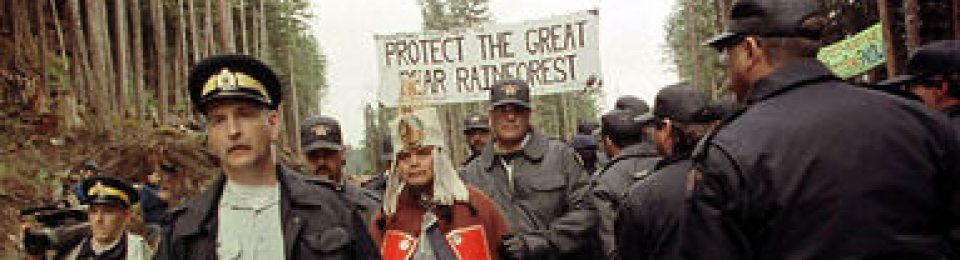
The Nuxalk Defense of Ista, 1995
Head Chief Nuximlayc’s statement on the 30th Anniversary: “They had been harvesting five million cubic meters of wood – every year – in Nuxalk territory. After the EU stopped buying it, after that, the timber harvest dropped to 200,000 cubic meters. That’s why we still have trees today.”
Nuxalk leaders of the House of Smayusta invited environmentalists to stay and join the reoccupation of Ista, King Island, in September 1995. Many were detained for defying the court injunction, and, later, the court’s jurisdiction.

Nuxalk hereditary Chiefs at Ista, September 1995. Photo from Nuxalk Nation.
When DFO cut the Líl’wat Elders’ fishing nets
A five-week roadblock of the Lillooet Lake Road ensued, after fisheries officers came in and destroyed the Elders’ salmon fishery in 1975.
Wénemqen of Tilálus was 16 years old at the time, and he recalls the roadside discussions, the visiting Chiefs, patrolling the road, media tactics, and jail.
54 people were arrested for “obstructing a public highway” – their own road. The bogus charges were thrown out; the jurisdiction issue remains.
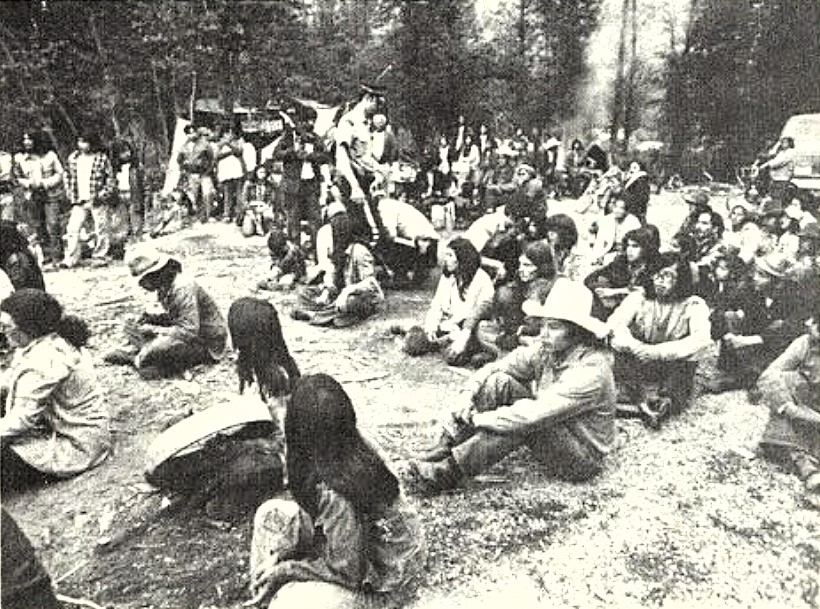
Líl’wat people sit on the road through their village, blocking traffic from Pemberton to Lillooet. Photo – Lil’wat Peoples Movement, archived online with riseupfeministarchive.
That day in Court: the Sparrow decision turns 35
In 1986, Chief Joe Mathias of Squamish spoke to the BC Aboriginal Peoples Fisheries Commission about recognizing DFO’s right to define conservation.
Reflecting that each community represented at that meeting was grappling with multiple – if not dozens or hundreds – of fishing charges, Mathias asked the Committee to challenge the federal government’s monopoly on “conservation.”

A few years later, the BC Aboriginal Peoples Fisheries Commission developed the Inter-Tribal Fishing Treaty of Mutual Support and Understanding. Image: the Treaty logo.
More:
World Council of Indigenous Peoples
held its first Annual General Meeting in Tseshaht, Nuu-chah-nulth, in October of 1975. Delegates from nineteen countries attended the three-day conference, identifying their barriers to equality as self-determining Peoples and Nations occupied by settler states with foreign values. Their work set the pace for ongoing representation in the international United Nations forum for diplomacy and cooperation.

Welcoming people from around the world to the first WCIP conference. Photo: Ha-SHILTH-sa newspaper, Dec. 1975.
Canada’s “Strategic Words and Tactics Team”
was revealed to Native leaders by sympathetic individuals in government in the 1970s and 80s. The Team has kept busy. Canada’s policy to deny “undefined Aboriginal rights” – including title – provides instead a suite of legislation which enables First Nation Band Councils to surrender their rights, in favour of rights defined by Canada.
*
Archive Quarterly
is published in Vancouver, Musqueam
by Electromagnetic Print.
Fall 2025 AQ:
48 pages
8.5×11, black and white
ISSN 2819 585X (print)
ISSN 2819 5868 (online)
 The West Wasn't Won