Tags
aboriginal rights, aboriginal title, Arthur Calder, BCANSI, Bill C-31, Buffalo Jump of the 1980s, Comprehensive Claims Policy, Delgamuukw trial, First Ministers Conference 1985, Gitxsan Wet'suwet'en, Indigenous Peoples, James Gosnell, Land claims, Methodist Missions North Pacific, Nielsen Report, Nisga'a, Non-Status Indian reinstatement, Papers relating to the Northwest Coast Commission 1888, Rejection of Funds
AQ Spring Edition Features:
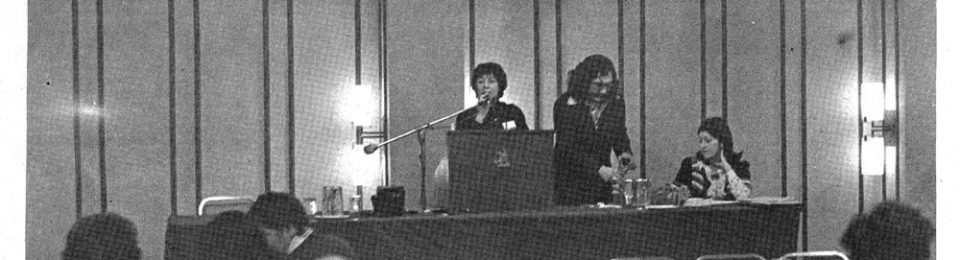
Rejection of Funds, April 1975
At the 7th Annual General Assembly of the Union of BC Indian Chiefs, all Indian Bands agreed to refuse federal transfer payments and program funding – rejecting government control.
The BC Association of Non-Status Indians joined them, “amalgamating the on- and off-reserve people and changing the political movement once and for all. The solution was the same for both of us: a just settlement of the Indian land question, and respect for our own governance.”
With quotes from media at the time, and comments from published interviews with Hereditary Kwagiulth Chief Hemaas, Bill Wilson and Grand Chief Saul Terry, St’at’imc; and Hereditary Wet’suwet’en Chief Ron George, unpublished 2018 interview.
Documentary resource: Nesika ~ The Voice of BC Indians, Volume 3, Issue 13, May 1975. Reporting on the Rejection of Funds and Militant May.
Bill C-31, 1985, and the first Reinstatement of Non-Status Indians
The federal objective “to keep lands reserved for Indians under the power of male Indians,” was one of the primary reasons for the first legislation respecting Indigenous Peoples, in 1869.
In order to achieve this, Canada defined who was, and who was not, a “Status Indian.” This Status, providing the right to live on-reserve and be a member of an Indian Band or First Nation, and pass Status to children, was increasingly denied to Native women.
With 40 legal actions against the government’s Registrar for wrongful misappropriation of entitlement, and a 1982 recommendation of the United Nations ICESCR treaty body, Canada removed some of the sexist restrictions to coincide with their new constitution’s Charter of Rights and Freedoms.
Documentary Resources: Bill C-31
First Ministers Conference on the Constitution, April 2, 1985
The Constitution Act, 1982, was passed for Canada with a British condition: the rights of Aboriginal Peoples, in Section 35, must be elaborated.
A formula to amend the Constitution was included in Section 37 of the Act: the country must hold First Ministers Conferences immediately, and specifically protect key aspects of the “existing rights” of Aboriginal Peoples in an amendment to the Constitution.
In 1985, Canada’s Prime Minister Brian Mulroney chaired the conference. He made an elaborate speech which, 40 years later, has still not been realized: “As a Canadian and as Prime Minister, I fully recognize and agree with the emphasis that the Aboriginal Peoples place on having their special rights inserted into the highest law of the land, protected–as we all want ours–from arbitrary legislative action.”
His statements were completely undermined by a report leaked ten days later.
Documentary Resources:
First Ministers Conference, Ottawa, April 2, 1985. Morning Session. Verbatim Transcript.
Including Statements of: Prime Minister Brian Mulroney, DAVID AHENAKEW (Chief, Assembly of First Nations), KEVIN DANIELS (Metis National Council), SAM SINCLAIR (President, Metis Association of Alberta), Louis (Smokey) BRUYERE (President, Native Council of Canada), MR. JOHN AMAGOALIK (Inuit Committee on National Issues)
First Ministers Conference, Ottawa, April 2, 1985. Afternoon Session. Verbatim Transcript.
Including Statements of: Prime Minister Brian Mulroney, GEORGE WATTS (Assembly of First Nations), HAROLD CARDINAL (Prairie Treaty Nations Alliance), CHIEF SOLOMON SANDERSON (Assembly of First Nations), HARRY W. DANIELS (Vice-President, Native Council of Canada), ZEBEEDEE NUNGAK (Inuit Committee on National Issues), M. SIOUI (chef de la Nation huronne Wondat de la Province de Quebec), JOHN CROSBIE (Canada), JIM SINCLAIR (Saskatchewan), ROLAND PENNER (Attorney-General, Manitoba), GEORGES ERASMUS (Northern Vice-Chief, Yukon and Northwest Territories, Assembly of First Nations), RICHARD HATFIELD (New Brunswick), JOHN AMAGOALIK (Inuit Committee on National Issues), BRIAN R.D. SMITH (Attorney General, British Columbia), JOE COURTEPATTE (President, Alberta Federation of Metis Settlement Associations, Metis National Council), FRED HOUSE (President, Louis Riel Metis Association, British Columbia), PETER LOUGHEED (Alberta), WILLIAM BENNETT (British Columbia)
“The Buffalo Jump of the 1980s,” the draft Nielsen Report to Cabinet: April 12, 1985
A draft memorandum for Cabinet, produced by the Deputy Prime Minister, Erik Nielsen, was leaked to the press at the same time the federal government was making overtures to Aboriginal self-government in the First Ministers Conference and reinstating Non-Status Indians in Bill C-31.
The Nielsen Task Force Report draft for Cabinet was titled, “The Buffalo Jump of the 1980s.”
The Report recommended slashing financial support for Indigenous political organizations.
Anticipating tens of thousands of people regaining Indian Status with changes to the Indian Act under Bill C-31, the government’s “Buffalo Jump” plan also hinged on devolving fiduciary responsibilities for Native health care, education, and economic development to the Provinces.
At the same time, the near-final Sechelt Self-Government Agreement made an example of an Indian Band which agreed to extinguish their title and rights, accepting instead a municipal role with small lands, powers of taxation, and the ability to engage in business – which is not possible under the Indian Act.
For First Nations faced with the failing First Ministers Conference – where Premiers showed no intention to support Aboriginal self-government in the Constitution; and the impending cut to federal funding; the direction of the intended “Buffalo Jump” stampede became clear.
Documentary Resources:
“Buffalo Jump of the 1980s” – Nielsen Report – “Funding cuts drive FNs into compromising programs,” Ottawa Citizen, April 19, 1985; AFN press release, May 8, 1985.
The Nisga’a Final Agreement: A 25th Anniversary Retrospective
Excerpts from a negotiation that exceeded a century:
“You saw us laughing yesterday because you opened the book and told us the land was the Queen’s and not the Indians’. That is what we laughed at. No one ever does that, claiming property that belongs to other people. We nearly fainted when we heard that this land was claimed by the Queen. The land is like the money in our pockets, no one has a right to claim it.” Chief Am-Clamman of Kit-wil-luk shilts, 1887.
With statements from 1884-1889 collected by Reverends of the Methodist Missions,
Excerpts from the Northwest Coast Commission at Port Simpson and the Nass, 1887,
The 1913 petition of the Nisga’a to the British King,
The Allied Tribes statement, formed in alignment with the Nisga’a position,
The role of the White and Bob hunting case, Nanaimo, in the Calder title case,
The Calder title case, and federal land Claims policy announced in 1973, in response to it,
Synopses of events across BC and Canada from 1912 to 1997, in court and on the ground, as they affected the Nisga’a case,
Debates of the BC politicians as they explained the Nisga’a Final Agreement,
Excerpts from the 2000 treaty,
And the court cases – by BC politicians and Nisga’a people – that followed it.
Documentary Resources:
Letter from the Methodist Missionary Society to the Superintendent-General of Indian Affairs respecting British Columbia troubles, May 1889.
Including: Protest of Port Simpson Chiefs to Mr. O’Reilly; Statement of Skidegate Chiefs; Affidavits of: John Ryan, Chief Paul Legaic, Louis Gosnell, Chief Alfred Doudoward, Charles Abbott, Chief Herbert Wallace, Richard Wilson, Chief David Mackay, Chief Arthur Calder, Charles Russ, George A. Gibson, Chief Scaban, Chief Ness-Pash, Chief Clay-Tsah, Chief Tat-Ca-Kaks, Job Calder; more.
Papers Relating To The Commission Appointed to Enquire into the Condition of the Indians of The North-West Coast, 1888, Government Printer at Victoria.
Including: Testimony of Chiefs George Kinsada, Adam Kishni, Moses, Albert Shakes, Samuel Seymour, Frederick Allen, Arthur Gurney, Nease Youse, Tallahaat, Sabassah, Hawillah, Job Calder (or Nouse), husband of Victoria, chiefess of the Naas Indians, Mountain, Matthew Naas, Charles Russ, Neis Puck, Kledach, David Mackay, Arthur Calder (son of Chieftainess Victoria), Hawillah, Am-Clamman, Paul Kledach (son of Chief Kledach), Paul Legaic, Richard Wilson, Alfred Doudoward. Charles Abbott, Gemmuc, Donald Bruce, Matthew Aucland, A. Leighton, and petitions and Letters;
And Statement of BC Premier William Smythe, 1887; Reserve Commissioner O’Reilly, Report and memos of Commissioners; etc.
“Nisga’a Treaty – Final Agreement Act – Bill C-51 – Committee Stage”– notes and quotes from the Provincial Government’s debate televised on CPAC and recorded on the Government’s website, Hansard. January 18-20 1999.
Closing Statement: Gitxsan and Wet’suwet’en Chiefs, 1990
At the end of 370 days of testimony, and at the end of the trial for title, Hereditary Chiefs made a statement to close the proceedings.
“Three years have passed since we made our opening statements to this court; at that time you did not know who Delgamuukw and Gisdaywa were. We, the Gitksan and Wet’suwet’en, must be compensated for loss of the Land’s present integrity and for the loss of economic rents. We ask that the court not only acknowledge our ownership and jurisdiction over the Land, but to restore it to a form adequate for Nature to heal in terms of restoration.”
AQ Spring 2025:
56 pages
8.5×11
ISBN: 978-1-7387902-9-6

Visit Archive Quarterly ~ journal of the west wasn’t won archive project, at Electromagnetic Print: books that resonate.

 The West Wasn't Won